At a glanceKey from adjacent plaintext · none (key obtained, text not read)
- The letter
- Galgano Borghesi, doctor of laws and Sienese orator at Naples, to Leonardo Benvoglienti, 12 May 1456. Clear Italian with fifteen runs of cipher and nine Latin code words.
- Where
- Archivio di Stato di Siena, Concistoro 2308, fasc. 2, no. 4; DECODE R4793, catalogued “1500–1599” with no status. Senatore (2009) cites it.
- The cipher
- Capitals, digits and signs, one sign per letter as far as read, with Latin code words (Calor = duca, storps = Lucca, cras = pace, pedesi = Iacopino).
- How it was deciphered
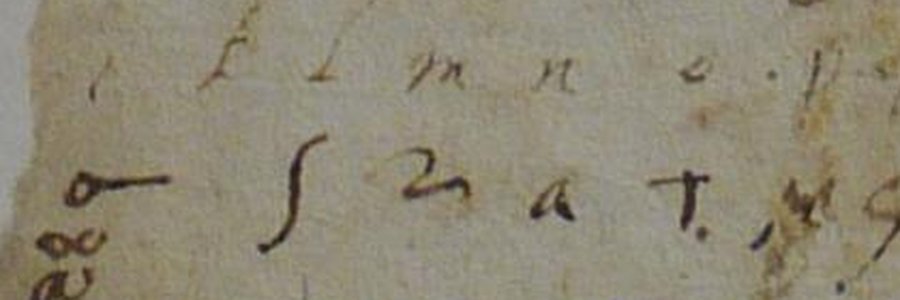
- None of the six keys of the 1450s filed in the same bundle fits. Below the text, torn on the left, an alphabet is written over its cipher signs; with the recipient’s glosses it gives the key.
- What it says
- Tentatively: Borghesi pressed King Alfonso over the promises made when Lucca was besieged; the Duke is said to be well disposed to Lucca and to peace; the peace with Iacopo Piccinino, the Florentine clergy, the Pope and the cardinals, and “contra lo Turcho” follow between holes.
- Credit
- Francesco Senatore identified the letter (2009).
- Still open
- The second half of the letter, which does not yet build sentences; the rapid clear hand of lines 18–23 on the only image; 19 rare signs; the code words toffe and vapor beyond their glosses.
This letter was filed on this site until 14 October 2026 with the rest of the Sienese bundle of cipher letters, in which each letter has its own key. The other letters whose keys were found are different ciphers, each with its own page: no. 25, no. 18, no. 14 and nos. 6 and 24 (deciphered by George Lasry); the unread pieces and the filed keys are on the bundle’s page.
01The letter and its key
A letter in clear Italian with fifteen runs of cipher (144 signs) and nine Latin code words, from the jurist Galgano Borghesi, on embassy to King Alfonso, to his colleague Leonardo Benvoglienti; Senatore (2009) cites it as “una lettera in cifra di Borghesi a Benvoglienti … da Napoli, 12 maggio”. The recipient glossed some runs between the lines (“duca”, “papa”, “per parte del duca”, “al re”): this is the partial decipherment behind the 1952 inventory’s “solo parzialmente decifrate”. None of the six 1450s keys of the bundle fits, though one of them (R4750, the Milan ambassadors’ key of 1454) shares the code word storps. Below the text, torn away on the left, an alphabet is written out over its cipher signs, i to u; with the glosses it gives the key. 114 of the 144 signs read securely, 11 more from context, 19 remain unread.
02What it says
The reading audit of 22 October 2026 classed the letter decoded, not read: the first cipher runs complete their clear sentences, but the second paragraph is cipher runs, code words and unread signs between doubtful clear words. On 23 October the glosses and lines 17–24 were re-read on the DECODE image. The code word pedesi is glossed “Iacopino” (Iacopo Piccinino, whose war on Siena was settled in 1456 under King Alfonso’s arbitration), cras is glossed “a pace” and “pace” (not “parte”), and toffe “al papa”. A partial reading of the whole letter was built (transcripts/no04_reading.md). The first paragraph of news holds:
Apresso. La Maestà del re ebbe a le strette gli adversarij e […] per mia instigatione volse includere de le […] Et tandem hec fuit […] che dicevamo che quando Lucha era assediata da Fiorentini, che le […] promesse al capitano […] se no[…]. E con questo […] stavamo […] e di mandato per [?papa] de le scritture disse erano rimasti a Milano, e che non le potemmo mostrare. Tunc rex parvi fecisse […] est, e chosì rimasero quasi beffati; tutto però buono per mettere aqua al mulino nostro.
“His Majesty the King had his adversaries in a tight corner and […] at my instigation wished to include some of the […] that we said that when Lucca was besieged by the Florentines, the […] promises to the captain […] the writings, he said they had been left at Milan and that we could not show them. Then the King made light of it, and so they were left almost mocked; all of it good, though, to bring water to our mill.” The second paragraph builds only its first sentence, “Antonio d'Arezzo qua era detto el duca essere bene disposto et a Lucca et a pace” (the Duke well disposed towards Lucca and towards peace); after it come the peace with Iacopino, the Florentine clergy, “ne al papa ne a cardinali” and “contra lo Turcho”, between holes. The rapid clear hand of lines 20–23 does not resolve at two or three times on the only image, so the letter stays decoded, not read.
03What remains
- 19 signs that occur once or twice (1, //, 8, F, the slashed x, the long T, the hooked 4, +, R, δ, B and others) and the code words toffe and vapor beyond their glosses (“al papa”, “e cardinali”); the fragment is torn and no filed key supplies them. pedesi (Iacopino) and cras (pace) are now given by the glosses.
- Lines 18–23: the rapid clear hand around the cipher runs (abbreviations such as “miss. p. ve.”, “ad quas instituit”) does not resolve at two or three times on the DECODE image (2,248 pixels wide), the only one.
Full texts
The transcription and the decryption of every document on this page, so that the reading can be used and checked. Short files are shown here; all are in the repository.
Naples, 12 May 1456, ASSi Concistoro 2308 fasc. 2 no. 4 (DECODE R4793) decoded, not read
Galgano Borghesi, orator at Naples, writes to Leonardo Benvoglienti that at his urging King Alfonso wanted the settlement to include the promises made when Lucca was besieged by the Florentines, and that the Pope, the Florentine clergy and the cardinals are to contribute against the Turk. The sense is tentative: 114 of the 144 cipher signs are given a value.
A mechanical decode with holes in most sentences: shown so that the transcription and the key can be checked and improved, not as a reading.
Transcription
# no. 4 = DECODE R4793, ASSi Concistoro 2308 fasc. 2 c. 4
# Galgano Borghesi (J.U. doctor, orator) to Leonardo Benvoglienti, Naples 12 May 1456
# Image: decode/img/IMG_R4793_I27928_P2.jpg (2248x4000); crops in crops/agentG/no4_*.jpg
# Transcribed by agentG, 24 Sept 2026.
#
# CONVENTIONS
#   [clear text]      clear Italian/Latin, abbreviations expanded where sure; '?' = doubtful reading
#   sign tokens       cipher signs separated by spaces, named as in keys/R47xx.txt (agentG naming convention:
#                     digits and Latin letters as themselves, capitals as capitals, drawn signs as words with '_')
#   <word>            code word (a Latin/Italian word used as a nomenclator entry)
#   {gloss: ...}      interlinear gloss by a second hand, placed right before the run it sits over
#   |                 separates the cipher run into the parts a gloss covers, where useful
#   L01 ...           line numbers of the text block (y = approximate pixel row of the baseline)
#
# Header (top of page, other hand): 1456 12 ma(ggio) Nap(oli)

L01 y1053  [Spectabilis et Magnifice vir tamquam pater hon(orandissime) post recomendationem etc. Poi che partisti di qua]
L02 y1114  [da noi non avemo mai alchuno aviso che non ci sia senza qualche ammiratione. Non però stimiamo]
L03 y1175  [sia in voi] [Morsg nove? e so?] [alchuna negligentia, che non suole stare con voi, ma più presto per difficultà]
           (the passage "Morsg nove e so alchuna negligentia" is underlined by a later hand; "Morsg nove" is written
            in the ordinary hand, not in cipher signs - reading doubtful)
L04 y1238  [che stimiamo che s'avvenute? La qual chosa oltre al darci maraviglia ci da anchora dispiacere e increscer]
L05 y1290  [Lamente? e in spesse spese? sono? che alcuna volta usiamo el termine vostro e diciamo che qualchuno]
L06 y1338  [e per via pure p(er) ...? non si arriva qui. Et pertanto vi preghiamo che questo? sia avvisate]
L07 y1390  [presto e se sia chosa da dire e gratia? e alla mia instructione bene etc. Se altro fusse se bisognia]
L08 y1442  [usate la cifra e dite lo facciamo e noi qui osservaremo questo ordine? e avvertaci? di Brunelleschi?]
L09 y1500  [Apresso. La M(aes)tà del re ebbe a le strette gli adversarij e dall'oro? p(er) mia instigatione volse includere]
L10 y1580  [de le va(r)ie? ragioni? anno? dissi? ss.pp.? che univano? decido? che alte? del? ... aut ... Et tandem]
           (clear, hard hand; underlined by a later reader from L09 to L11; reading very doubtful)
L11 y1635  [hec fuit c(ausa)? che dicevamo che quando Lucha era assediata da Fiorentini che le Senesi? promesse]
L12 y1690  a l L 3 M o o L_slant A A T . [fussi? intromettessi?:] [se]· N T 1 q_tilde l l o_tail 8 q_foot · [etc. e con questo mezzone? stavamo pasti? di]
           signs: a = Latin a (small, round); l = a plain upright stroke (could be '1'/'l'); L = capital L (upright);
                  3 = numeral 3 with a long tail ('ʒ'); M = capital M; o o = two small circles (touching, 'oo');
                  L_slant = an L whose stem leans right ('∠'); A A = two capital A's (first with a foot hook); T = capital T;
                  N = capital N; 1 = numeral 1/I; q_tilde = '9'/'q' with long descender and a tilde above (= R4757 u 'q_tilde');
                  l l = two parallel slanting strokes ('//'); o_tail = small circle with a stroke to the right ('o—', = R4757 a);
                  8 = numeral 8; q_foot = 'q'/'9' whose descender crosses a long horizontal foot bar (= R4762 null 'q_foot')
#  CORRECTIONS after the second pass at 6-8x (see no04_reading.txt): L12 'A A T' is 'A N T'; L13 'o_slash' is a
#  circle_cross (⊕ with a blot) and 'N L' is 'H L'; L18 'M q 4 H' is 'M g_ring 4 H'; L24 first sign is a small
#  'z_small' (ʔ-like), not the numeral 2; L21 gloss '+ ukl cho' = 'turcho'.
L13 y1745  [e di mandato p(er)] [ma - struck] o_slash · 9 4 longs sigma N L g_ring a o{x above} e g_ring x [disse erano rimasti] [amo? - struck, a '3'/'ʒ' written above] q_foot 2 oo longs q_foot a T [e che]
           signs: o_slash = a circle struck by a diagonal (upper left to lower right) with a heavy blot at the top (cf. R4754 null 'o_slash');
                  9 = numeral 9 with a long tail curling to lower left; 4 = numeral 4 (open, crossed form);
                  longs = long s 'ſ' written like a 'Γ' (flat top, long descender); sigma = a 'σ'/lying '6' (round bowl,
                  flat stroke running right from its top; cf. R4754 o 'G'); N = capital N (thin, 'H'-like);
                  g_ring = a 'g'/'9' whose descender ends in a small closed circle (like an '8' with a stem between the loops);
                  o{x above} = a small circle/b with a small 'x' written over it (correction?); x = Latin x;
                  2 = numeral 2; oo = two circles joined ('∞')
L14 y1805  [non le potemmo mostrare.] [Tunc? (T-u-c with overline)] · g_ring 4 k · M 3 g_ring e o_tail [overline:] curl9 4 L oo p_bar{small 'a'/'u' above} 4 7 · q_foot f N 8 q_foot? H · 4 H L_slant [e chosi]
           signs: k = Latin k; e = an 'e'/'C' with an inner loop; curl9 = a '9'-like sign, loop on the right and stroke curling
                  round to lower left (= R4750 t 'curl9'); p_bar = Latin p with a bar through the descender ('ꝑ');
                  7 = numeral 7; f = Latin f; H = capital H (thin)
L15 y1858  [rimasero quasi beffati, tutto però buono per mettere [hole] aqua al mulino no(stro). Ma avvisateci degli?]
           ('aqua' here is clear Italian in the idiom 'mettere aqua al mulino', not a code word)
L16 y1919  [gente.]
L17 y1952  [Antonio d'Arezzo qua era detto] A longs {gloss: duca} <Calor> [essere bene disposto et] {gloss: a Lucca} q_foot <storps> [et] {gloss: a parte? / a pace?} 3 <cras> [.] A [.]
           (gloss 'duca' sits over the start of 'Calor' (x 964-1060); the 'A ſ' before it is at x 896-944; 'a Lucca' spans
            'q_foot storps'; the third gloss 'a pa(r?)e' spans '3 cras': read 'a pace' at first sight, but 'cras' is glossed
            'parte' in L18, so 'a parte' is likelier)
L18 y2013  [et che aveva contentato] {gloss: papa} <Maffeo? / Matteo?> · [che] · {gloss: rex la (= per la?)} M 4 g_ring longs 3 {gloss: parte} <cras> {gloss: con} L T a {gloss: sa? più} <pedesi? / pedes?> [pigliasse de la] 4 x_slash T_long {gloss: presto} M q 4 H L_slant q_foot
           signs: x_slash = a slanted 'x'/'t' crossed ('ɫ'-like, a light stroke); T_long = capital T with a bar over it whose
                  stem runs down into the next line and hooks; q = Latin q (closed bowl, straight tail)
           (the gloss above 'M4g ſ3' reads 'rexla'/'per la'; 'presto' sits over 'M q 4 (H)')
L19 y2068  {gloss: de le} 9 sigma longs {gloss: chercato? / chercavano?} L y 4 g_ring o_tail L 3 L_slant T [de Fiorentini] x b° [che non aveva anche per messo] [ai - struck] [ne] {gloss: al papa} q_foot <toffe? / t offe?> [· struck ·]
           signs: y = Latin y; b° = Latin b with a small superscript circle (possibly a clear numeral 'xv°')
L20 y2128  {gloss: e cardinali} a{superscript n} 4_hook 3 <vapor> · [se ne?] · {gloss: pigliasse} M o_tail h longs oo 3 p_bar {small gloss 'a' above} 4 A [uno giorno in altro modo misser? per ve? ad quanto? instituito?]
           signs: 4_hook = numeral 4 whose top stroke hooks back over to the left; h = Latin h with a long tail below the line ('ɧ');
                  A = capital A with a flat top bar
L21 y2188  [est? e nt(?) volent? instructi? ricoprimento e poi per bisognando contra] {gloss: l. qn.} longs T {gloss: + ukl cho} L_slant c g_ring L y q · [tantudi?]
           signs: c = Latin c / open 'u'; (the gloss letters are small and faint, reading uncertain)
L22 y2249  [vernit? di sho? Questo medesimo se è vero lo dovete aver chosi pure inotz? entrary?]
L23 y2318  [...ito? ausprurim? e chosi adisse? tutto] {gloss: per parte} M 4 g_ring · M 3 g_ring L_slant sigma 7 : {gloss: del duca} 9 4 longs · <Calor> [avere] {gloss: rif e} g_ring o_tail 9 4
           (sigma here is small and raised; 7 has a hooked foot)
L24 y2376  {gloss: al re} 2 longs phi · 7 + + R · delta B · [A Siena stimiamo questo medesimo per la lettera lasciata con questa]
           signs: 2 = small numeral 2 / 'ʔ'; phi = circle with a vertical stroke through it (φ); + = plus/cross;
                  R = capital R; delta = uncial 'd' ('∂'); B = capital B
L25 y2436  [...iamo che non lo sappiamo se è vero per avisarli di tutto e che abbiamo novelle di noi spetta?]
L26 y2496  [...esta quando accade ne bisogna altra spesa per mandarla e se sono? credenti? a Siena per ho]
L27 y2560  [...lli credete più potè operare che abbiamo tenuti che sia senza uno quattrino.]
L28 y2630  [...mi spesso per che abbiamo novelle di voi e che estimo? de Brunettcho? Non altro]
L29 y2695  [...z? nominus? militis? cop? te meo salutate. Dat. Neapoli die xij maij hora ...ly?]

# Below the text, left of the subscription (x 700-1400, y 2730-2830): a two-row KEY FRAGMENT
#   upper row, small faint letters (glossator's hand?):   i  f?  l?  m  n  o/e  p  q  r  s  t  u  z
#   lower row, darker cipher signs:                      o_tail longs 2  a  T  M  S/5 g_ring y  L_slant C  -
#   aligned by x position (each pair within ~10 px):
#     i = o_tail   l(f?) = longs   m = 2   n = a   o = T   p = M   q = S? (a '5'/'S')   r = g_ring
#     s = y?   t = L_slant   u = C   (z: nothing under it; left margin has small 'a°'/'ae' letters)
#   These values fit the glossed runs (see notes below).
#
# Subscription (right): [Galghanus Borghesius / J(uris) U(triusque) doctor et orator etc.]
#
# ADDRESS (verso, decode/img/IMG_R4793_I27928_P1.jpg, written upside down relative to the scan; crop no4_addr.jpg):
#   [Magnificho viro Leonardo / de Benvoglientis Oratori / et Comiti Senensi? in Urbe? / ut patri honorando etc.]
#   (line 3 'et Cumiti? Sen(ensi)? in Urbe' is abbreviated and uncertain: 'Comitis Senarum?'; 'in Urbe' = at Rome?)
#   Pencil docket, other side, modern hand: "1456 maggio 12"
#
# NOTES ON THE GLOSSES (agentG; checks only, not a decipherment)
#  * the key fragment plus the glosses give a consistent partial alphabet:
#      M=p, 4=e, g_ring=r, 3=a, L_slant=t, sigma=e, 9=d, longs=l, o_tail=i, q_foot=a, 2=m, oo=i, a=n, T=o, L=c
#  * L23 'per parte del duca': M 4 g_ring (per) · M 3 g_ring L_slant sigma (parte; the 7 after it a null?) : 9 4 longs (del) <Calor> (duca)
#  * L19 'de le': 9 sigma longs ; 'che[r]cato': L y 4 g_ring (o_tail) L 3 L_slant T
#  * L13 q_foot 2 oo longs q_foot a T = a m i l a n o -> 'a Milano' (unglossed)
#  * L20 'pigliasse': M o_tail h longs oo 3 p_bar 4 (A) -> p i g l i a ss e (+ A null?)
#  * L18 'con': L T a
#  * code words: Calor = duca (twice), storps = Lucca?, cras = parte/pace, vapor = cardinali?, Maffeo? = papa
Decryption
# no. 4 (R4793) - reading of the cipher runs with the working key keys/no04_key.txt
# Galgano Borghesi to Leonardo Benvoglienti, Naples 12 May 1456. agentG, 24 Sept 2026.
# Transcription: transcripts/no04.txt. Every run re-read on the image at 5-8x (crops/agentG/r12a..r24a, r14d, r18a-c, r19e,
# r20a, r21a, r23e, k_a-k_c).
#
# Notation: UPPER CASE = deciphered letters; '?' = unread sign; (x?) = doubtful letter; <word> = code word;
#           {gloss} = interlinear gloss; [clear] = clear text (reading of the clear hand is itself doubtful in places).
#
# KEY FRAGMENT re-checked (k_a, k_b, k_c): upper row 'i f?/l m n o p q r s t u z', lower row
#   o_tail longs 2 a T M S g_ring y L_slant C. Nothing for a-h: the sheet is torn away to the left of it.
#   In the left margin next to it two small letters 'a' and 'ae'/'oe' stacked (possibly the start of a vowel column,
#   the rest lost in the tear). No other key rows on the recto margins or on the verso (P1 has only the address and
#   the modern pencil docket '1456 maggio 12').
#
# ------------------------------------------------------------------------------------------------
# RUN BY RUN
# ------------------------------------------------------------------------------------------------
R1  L12  a l | L 3 M oo L_slant A N T
         -> AL CAPITANO          ('a l' may be clear 'al'; the 2nd 'A' of my first pass is an 'N')
R2  L12  N T 1 q // o_tail 8 q_foot     (small 'u'? written over the q by the glossator)
         -> NO ? ? ? I ? A        (probably 'NO[N] ...'; 1, q, //, 8 unread here; q = o in L21 would give 'NO?O?I?A')
R3  L13  circle_cross (⊕ with a blot)
         -> (PAPA?)               ('di mandato per [ma - struck] ⊕'; R4757 writes papa as ⊕)
R4  L13  9 4 longs sigma H L g_ring o_tail tt_sign C_loop g_ring x
         -> DE LE SCRI(TT?)(U?)R(E?)  = 'de le scritture'   (first pass read 'N' for H; tt_sign = δ with a small x above)
R5  L13  q_foot 2 oo longs q_foot a T
         -> A MILANO
R6  L14  g_ring 4 k         (after clear 'Tunc')
         -> RE(X?)             'Tunc rex'
R7  L14  M 3 g_ring C_loop o_tail | curl9 4 L oo p_bar 4 | 7    (overline over curl9 4)
         -> PARUI FECISSE (+7 = e/null)   'parvi fecisse'
R8  L14  q_foot F H 8 q? H · 4 H L_slant
         -> A ? S ? ? S · EST     (F, 8 and the blotted q-like sign unread; Latin '... est')
R9  L17  A longs <Calor> {duca} ; q_foot <storps> {a Lucca} ; 3 <cras> {a parte?/a pace} ; · A ·
         -> AL <duca> ; A <Lucca> ; A <parte/pace> ; A?
R10 L18  <Matto?/Maffo?> {papa} · che · M 4 g_ring longs 3 {rex la = per la} <cras> {parte} L T a {con} <pedesi?> {sa? più}
         [pigliasse de la] 4 x_slash T_long {presto} M g_ring 4 H L_slant q_foot
         -> <papa> che PER LA <parte> CON <pedesi?> pigliasse de la E? ? O? PRESTA   (first pass read 'q' for g_ring)
R11 L19  9 sigma longs {de le} L y 4 g_ring o_tail L 3 L_slant T {chercato} [de Fiorentini] x b° ... [ne] q_foot <toffe?> {al papa}
         -> DEL CHERICATO de Fiorentini ? ? ... ne A <papa?>
R12 L20  a{n} 4_hook 3 <vapor> {et cardinali}    ·  M o_tail h longs oo 3 p_bar 4 A {pigliasse}
         -> ? ? A? <cardinali?>  ·  PIGLIASSE A      (small 'n' over the 'a' is a glossator's letter: a = n, fits FRAG;
            'N ? A' does not give 'et' - unresolved)
R13 L21  longs T {l. o} L_slant c g_ring L y q {+ uklcho = turcho}
         -> LO TURCHO            'bisognando contra lo Turcho'
R14 L23  M 4 g_ring {per} · M 3 g_ring L_slant sigma 7 {parte} : 9 4 longs <Calor> {del duca} [avere] g_ring o_tail curl9 4 {rif e}
         -> PER PARTE(+7) : DEL <duca> avere RIFE[rire]
R15 L24  z_small longs phi 7 {al re} + + R · delta B
         -> AL RE ? ? ? · ? ?     (z_small = a, phi = r, 7 = e from the gloss only; + + R, delta, B unread)
#
# ------------------------------------------------------------------------------------------------
# RUNNING TEXT (clear + deciphered; clear-hand readings marked ? are uncertain)
# ------------------------------------------------------------------------------------------------
Spectabilis et Magnifice vir tamquam pater honorandissime, post recomendationem etc. Poi che partisti di qua da noi
non avemo mai alchuno aviso, che non ci sia senza qualche ammiratione. Non però stimiamo sia in voi [Morsg nove? e so?]
alchuna negligentia, che non suole stare con voi, ma più presto per difficultà che stimiamo che s'avvenute? La qual
chosa oltre al darci maraviglia ci dà anchora dispiacere e increscere grandemente?, e in spesse? ... che alcuna volta
usiamo el termine vostro, e diciamo che qualchuno e per via pure ... non si arriva qui. Et pertanto vi preghiamo che
questo sia avvisate presto, e se sia chosa da dire ... e alla mia instructione bene etc. Se altro fusse, se bisognia
usate la cifra e dite lo facciamo, e noi qui osservaremo questo ordine? ...
Apresso. La Maestà del re ebbe a le strette gli adversarij e dall'oro? per mia instigatione volse includere de le
va[r]ie? ragioni? ... Et tandem hec fuit c(ausa)? che dicevamo che quando Lucha era assediata da Fiorentini, che le
Senesi? promesse AL CAPITANO fussi intromettesi?, se NO[N] ...I.A etc. E con questo mezzone? stavamo pasti? e di
mandato per [PAPA?] DE LE SCRITTURE disse erano rimasti A MILANO, e che non le potemmo mostrare. Tunc REX PARVI
FECISSE [7] A.S..S EST, e chosì rimasero quasi beffati; tutto però buono per mettere aqua al mulino nostro. Ma
avvisateci degli ... gente.
Antonio d'Arezzo qua era detto AL <DUCA> essere bene disposto et A <LUCCA> et A <PARTE/PACE>. A. Et che aveva contentato
<PAPA> che PER LA <PARTE> CON <pedesi?> pigliasse de la E?.O? PRESTA DEL CHERICATO de Fiorentini ?? che non aveva
anche per messo ne A<L PAPA>? ... <ET? CARDINALI> se ne? PIGLIASSE A uno giorno in altro modo misser? per ve? ad quanto?
instituito? ... ricoprimento e poi per bisognando contra LO TURCHO ... tantudi? vernit? di sho? Questo medesimo se è
vero lo dovete aver chosì pure ... e chosì adisse? tutto PER PARTE : DEL <DUCA> avere RIFE[RIRE] AL RE ?? ?? .
A Siena stimiamo questo medesimo per la lettera lasciata con questa ... che non lo sappiamo se è vero, per avisarli di
tutto, e che abbiamo novelle di noi ... questa quando accade ne bisogna altra spesa per mandarla ... a Siena ... più
potè operare che abbiamo tenuti che sia senza uno quattrino ... per che abbiamo novelle di voi e che estimo? de
Brunettcho? Non altro ... salutate. Dat. Neapoli die xij maij hora ...
Galghanus Borghesius, J(uris) U(triusque) doctor et orator etc.
Address: Magnificho viro Leonardo de Benvoglientis oratori ... ut patri honorando.
#
# SUMMARY
# Borghesi, Sienese orator at Naples, scolds Benvoglienti for sending no news and asks him to use the cipher. He reports
# that King Alfonso had pressed the adversaries and, at Borghesi's prompting, wanted the agreement (the 1455-56 settlement
# after Piccinino's war against Siena) to include the promises made when Lucca was besieged by the Florentines, 'to the
# captain' (Piccinino?); that 'the writings' were said to be left in Milan and could not be shown, the king made light of
# it and the other side was left 'quasi beffati' - water to Siena's mill. Antonio d'Arezzo reportedly said the Duke (of
# Milan) was well disposed towards Lucca and towards peace/the matter; the Pope had been satisfied that the Florentine
# clergy should take a share (of the crusade levy?), and the cardinals too; the money was needed 'contra lo Turcho'. Then
# a message 'on the part of the Duke' to be reported to the King. The rest is clear: news, costs of couriers, greetings.
# The summary of the cipher passages is tentative; the crusade/tithe reading of L18-L21 is context-driven.
#
# COUNTS (cipher signs, code words excluded)
#   runs: 15; cipher sign tokens: 144
#   read (letter assigned from fragment/gloss/consistent context): 114
#   doubtful (letter proposed from context only):                  11   (a l in R1, ⊕, tt_sign, C_loop, x in R4, k, 7 in R7,
#                                                                         final A in R9, 4? in R10, 7 in R14)
#   unread:                                                          19   (1 q // 8 in R2; F 8 q? in R8; x_slash T_long in R10;
#                                                                         x b° in R11; a 4_hook 3 in R12; + + R delta B in R15)
#   code words: 9 tokens (Calor x2, storps, cras x2, Matto?, toffe?, vapor, pedesi?) - 7 with a gloss, pedesi? and
#   the exact form of Matto?/toffe? unresolved.
#   Read share of sign tokens: 114/144 = 79%; with doubtful: 125/144 = 87%.
Reading
# no. 4 (DECODE R4793): Galgano Borghesi, Naples, to Leonardo Benvoglienti, 12 May 1456 — reading (re-read b25)

Rests on: the clear text as transcribed in `no04.txt` (agentG, 24 Sept 2026), with lines 17-24 re-read on the DECODE
image on 23 Oct 2026 (`no04_reread_log.md`); the cipher runs deciphered with `keys/no04_key.txt` (alphabet fragment
on the letter + glosses) as in `no04_reading.txt`; the recipient's interlinear glosses, re-read on 23 Oct 2026
(new: "Iacopino" over the code word *pedesi*, "a pace" over *cras* in l. 17, "al papa" over *toffe*). Cipher-run
words are in small capitals in `no04_reading.txt`; here they are given in plain type, code words by their gloss.
Spelling as written. Holes: `[?word]` doubtful (clear hand or cipher), `[…]` unread, `[word]` supplied (one: "[el] papa").
The clear hand of ll. 3-10 and 20-23 is a rapid cursive and many of its words are doubtful.

## Reading

Spectabilis et Magnifice vir tamquam pater honorandissime, post recomendationem etc. Poi che partisti di qua da noi non avemo mai alchuno aviso, che non ci sia senza qualche ammiratione. Non però stimiamo sia in voi […] alchuna negligentia, che non suole stare con voi, ma più presto per difficultà che stimiamo che [?s'avvenute]. La qual chosa oltre al darci maraviglia ci dà anchora dispiacere e increscere, e in [?spesse] […] che alcuna volta usiamo el termine vostro, e diciamo che qualchuno e per via pure […] non si arriva qui. Et pertanto vi preghiamo che [?questo] sia avvisate presto, e se sia chosa da dire […] e alla mia instructione bene etc. Se altro fusse, se bisognia usate la cifra e dite lo facciamo, e noi qui osservaremo questo [?ordine] […].

Apresso. La Maestà del re ebbe a le strette gli adversarij e […] per mia instigatione volse includere de le […] Et tandem hec fuit […] che dicevamo che quando Lucha era assediata da Fiorentini, che le […] promesse al capitano […] se no[…]. E con questo […] stavamo […] e di mandato per [?papa] de le scritture disse erano rimasti a Milano, e che non le potemmo mostrare. Tunc rex parvi fecisse […] est, e chosì rimasero quasi beffati; tutto però buono per mettere aqua al mulino nostro. Ma avvisateci degli […] gente.

Antonio d'Arezzo qua era detto el duca essere bene disposto et a Lucca et a pace. Et che aveva contentato [el] papa che per la pace con Iacopino pigliasse de la […] presta […] del chericato de Fiorentini […] che non aveva anche permesso ne al papa ne a cardinali se ne pigliasse […] uno giorno in altro modo […]. […] e poi per bisognando contra lo Turcho […]. Questo medesimo se è vero lo dovete aver chosì pure […]. […] e chosì [?adisse] tutto per parte del duca avere [?riferire] al re […].

A Siena stimiamo questo medesimo per la lettera lasciata con questa […] che non lo sappiamo se è vero, per avisarli di tutto, e che abbiamo novelle di noi […] quando accade ne bisogna altra spesa per mandarla […] a Siena […] più potè operare che abbiamo tenuti che sia senza uno quattrino […] per che abbiamo novelle di voi […] Non altro […] salutate. Dat. Neapoli die xij maij.

## Notes

- *pedesi* glossed "Iacopino" (l. 18, the gloss read on 23 Oct 2026; the 24 Sept pass read "sa? più"): Iacopo
  Piccinino, whose war on Siena was settled in 1456 under King Alfonso's arbitration. *cras* glossed "a pace" (l. 17)
  and "pace" (l. 18; the 24 Sept pass read "parte"): cras = pace.
- l. 17 "el duca": the run before *Calor* is `4 longs` (e-l), not `A longs` (24 Sept).
- l. 19/20 "ne al papa ne a cardinali": `q_foot <toffe>` glossed "al papa" and `a 4 3 <vapor>` glossed "e cardinali",
  `a` = n and `4` = e by the fragment: NE A <cardinali>.
- l. 18 `4 x T_long` after "pigliasse de la" and `+ + R · delta B` (l. 24) stay unread (signs not in the fragment).
Translation
# no. 4 (DECODE R4793): Galgano Borghesi, Naples, to Leonardo Benvoglienti, 12 May 1456 — English (partial)

Translation of `no04_reading.md`, same holes. The letter is not read to the bar (second paragraph fragmentary).

## Translation

Worshipful and magnificent sir, honoured as a father, after commendation etc. Since you left us here we have had no news from you, which is not without some surprise. We do not think there is in you […] any negligence, which is not your way, but rather some difficulty that we think [?has arisen]. Which, besides surprising us, also displeases and troubles us, and in [?frequent] […] that we sometimes use your term, and we say that someone, and by the road too, […] does not get here. So we ask you to let [?this] be advised quickly, and whether it is a thing to be said […] and to my instruction well etc. If there is anything else, if need be use the cipher and say we do it, and we here will keep this [?order] […].

Next. His Majesty the King had his adversaries in a tight corner and […] at my instigation wished to include some of the […] And in the end this was […] that we said that when Lucca was besieged by the Florentines, the […] promises to the captain […]. And with this […] we stayed […] and being sent for [?the Pope?] the writings, he said they had been left at Milan and that we could not show them. Then the King made light of it […], and so they were left almost mocked; all of it good, though, to bring water to our mill. But let us know about […] troops.

Antonio d'Arezzo here was saying that the Duke was well disposed both towards Lucca and towards peace. And that he had satisfied [the] Pope that, for the peace with Iacopino [Piccinino], he should take some of the […] ready […] of the clergy of the Florentines […] who had not yet allowed either the Pope or the cardinals to take any […] one day in another way […]. […] and then, as needed, against the Turk […]. This same, if it is true, you must have likewise […]. […] and so [?he said?] all of it, on behalf of the Duke, to [?report] to the King […].

At Siena we think the same, by the letter left with this one […] that we do not know whether it is true, to inform them of everything, and that we have news of us […] when it happens there is need of another expense to send it […] to Siena […] could do more, that we have been kept without a penny […] so that we have news of you […] Nothing else […] greet. Given at Naples, 12 May.
Key: no04_key.txt
04Sources
- Archivio di Stato di Siena, Concistoro 2308 fasc. 2 no. 4: DECODE R4793.
- F. Senatore, “Callisto III nelle corrispondenze diplomatiche italiane”, Revista Borja 2 (2009): identifies the letter.
- G. Cecchini (ed.), Archivio del Concistoro del Comune di Siena. Inventario (1952), p. 366.
Manuscript rights: Archivio di Stato di Siena.
Transcription, key and reading: targets/borghesi1456/; the transcribed 1450s keys are in targets/siena1421/.