At a glanceExisting decipherment, in part · 58 of 106 groups
- The telegrams
- The Count of Sabugosa to Queen Amélie: Lisbon to Paris, 13 May 1903; Lisbon to Naples, 24 April 1904; London to Lisbon (Necessidades), 21 and 24 May 1910.
- Where
- Arquivo Nacional Torre do Tombo, Documentos de D. Carlos, D. Amélia e D. Manuel II, maço 14, PT/TT/CAM/M14, 17 images on DigitArq. Catalogue entry 410.
- The cipher
- A one-part (alphabetical) Portuguese code: five-figure groups carry words from a to h, four-figure groups words from i to v. Names are spelled in pieces: Soveral is So / ver / al.
- How it was deciphered
- Pencil decodes made at the time are among the clear cards of the same unit (m0009, m0008, m0005 + m0004). Matched to their telegrams by clear words, dates and signatures, they give 52 code values, and the values fall in alphabetical order.
- What it says
- Queen Alexandra received Sabugosa after Edward VII’s funeral; the King ended by saying “tratarei de o casar”, “I will see to getting him married”; Soveral will take up the negotiation.
- Still open
- The 1903 telegram (43 groups, no decode). In the telegram of 24 May 1910, two groups the decoder left blank and four words he marked doubtful.
- Credit
- Transcription, the matching of decodes to telegrams, dating and the code values by WAINUT (27 October 2026), done with AI language-model agents; transcriptions made with a vision-capable model and checked against the DigitArq images by a second agent. The decodes are those made for the Queen in 1904 and 1910.
01 The telegrams
Maço 14 holds four code telegrams (m0010, m0012–13, m0014, m0016; m0017 is a telegram envelope) and clear cards and sheets (m0001–m0009), most of which are pencil decodes of the telegrams. The sender signs SABUGOSO (1903), SABUGOZA (1904) and Sabugosa (1910): the Count of Sabugosa, António Maria de Melo, the Queen’s chief steward (mordomo-mor).
| telegram | route and date | groups | decode of the time | state |
|---|---|---|---|---|
| m0014 | Lisbon → Paris, 13 May 1903 (stamp probable), “AMPLIATION” | 43 | none found | not deciphered |
| m0016 | Lisbon (Alcântara) → Naples, 24 Apr 1904 | 10, among clear words | m0009, dated 24-4-04 | complete |
| m0010 | London (Buckingham Palace) → Lisbon, 21 May 1910 | 16 | m0008, dated 21-5-10 | complete |
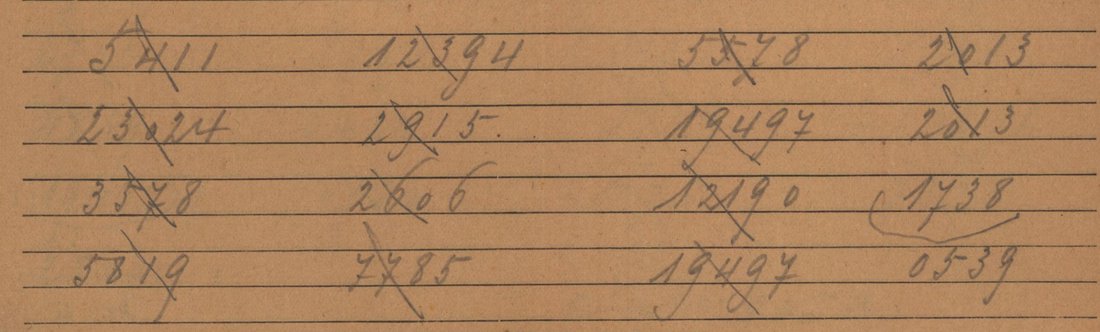
| m0012–13 | London → Lisbon, received 24 May 1910 | 37 | m0005 + m0004, with question marks | 32 of 37 |
For the three handwritten and Naples forms, the word count on the form equals groups + clear words + address words, which checks the number of groups. The first pass had m0014 and m0016 running the other way and m0014 in 1910 with 51 groups; by the forms’ own rule (origin before serial number) they run from Lisbon, and m0014 is of May 1903 with 43 groups.
02 The decodes of the time
Each decode was matched to its telegram. m0009 begins with the clear words of m0016 (“Agradeço com vivo reconhecimento telegramma de V. M. que”) and gives ten words for its ten groups. m0008 has the date and signature of m0010 and 15 words for its 16 groups. m0005 + m0004 are signed Sabugosa; their question marks fall where the receiver circled groups in m0012–13, and their first word, Rainha, is the group 5411 that m0008 also reads Rainha.
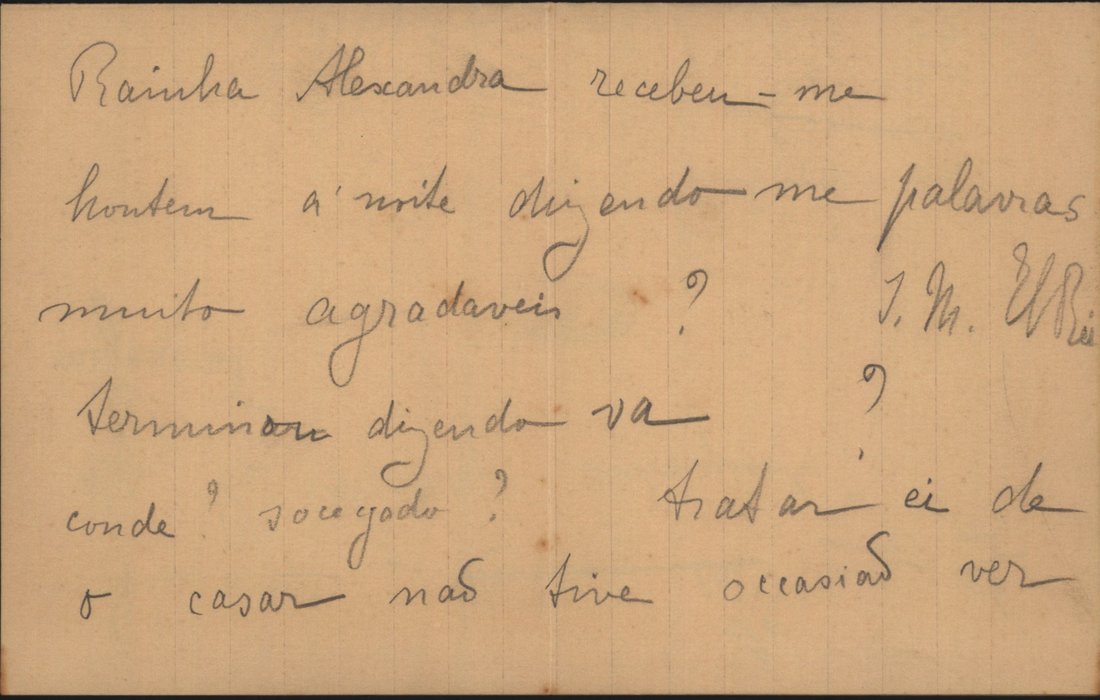
On m0004 the decoder first wrote a word in So- and struck it, then wrote “ver al”: the name Soveral is three groups, 7034 / 8747 / 12296, and the same three groups stand for Soveral in the telegram of 21 May. He wrote “tratar ei” as two words, tratar + the future ending -ei (group 19719), i.e. tratarei; an earlier pass had “Tratar é de”.
03 The code
The three decodes give 52 groups a value, with no conflict between them (code.py, code_values.tsv). The code is one-part: five-digit groups (11501–23400) carry words from a to h (agradaveis 12190 … hontem 23024), four-digit groups (0139–9019) words from i to v (informação 0139, ir 0320 … veio 8975), and within each series the numbers follow the alphabet. Among the values taken one group to one word from a decode, 3 of 406 pairs are out of order in the four-digit series and 0 of 136 in the five-digit series; 2000 random shuffles of the same words over the same numbers give at least 117 and 32. The three are tive/terminou and ver/veio.
One code served from 1903 to 1910. The 1904 and 1910 values fall into one alphabetical order, and the 1903 telegram shares 19482 (diz), 18063 (de, twice) and 19656 (e, three times). King Carlos used a different code in the same weeks of 1903, and Venceslau de Lima’s of 1909 is a third.
The order also weighs the decoder’s doubts. socegado 7114 sits next to socegar 7115 (1904), which supports it. His “va” (0539) stands among i–m words, so it is probably wrong. 13657, which the decode of 21 May renders “assumpto” (the matter), stands just after casar 13616: by its place a word in cas- (casamento, marriage?), with “assumpto” perhaps the decoder’s paraphrase. That is not adopted in the text.
04 What they say
24 April 1904, Lisbon to Naples (m0016; only “veio … mesmo” is coded):
Agradeço com vivo reconhecimento telegramma de Vossa Magestade, que veio socegar meu coração. Ser e serei sempre o mesmo. Estimo muito boas noticias e demonstrações. Escrevo. Beijo mão Vossa Magestade. Sabugoza.
“I thank Your Majesty with lively gratitude for the telegram, which has set my heart at rest. I am and always will be the same.” The code has the infinitive “ser” where the sense wants “sou”.
21 May 1910, London to Lisbon (m0010), the day after Edward VII’s funeral:
Hoje ElRei tenciona falar Rainha para Soveral tratar com ella assumpto. Espero amanhã dar informação. Sabugosa.
“Today the King [George V] intends to speak to the Queen so that Soveral may take up the matter with her. I hope to give news tomorrow.” Soveral is the Marquis of Soveral, Portuguese minister in London.
24 May 1910, London to Lisbon (m0012–13), with the decoder’s gaps kept:
Rainha Alexandra recebeu-me hontem á noite, dizendo-me palavras muito agradaveis [?]. S. M. ElRei terminou dizendo [?va] [?] [?conde] [?socegado], tratarei de o casar. Não tive occasião ver Princeza. Soveral diz ir tratar [?subsequente] negociação. Sabugosa.
“Queen Alexandra received me last night and said very kind words to me. His Majesty the King ended by saying […]: ‘I will see to getting him married.’ I had no opportunity to see the Princess. Soveral says he will go to handle the [further] negotiation.” “Him” is presumably Manuel II; the Princess is not named. These are the 1910 attempts to arrange a British marriage for the young King. Two more cards of the same week are in clear: a decode of 22 May whose coded telegram is not in M14 (Queen Alexandra invites “the Princess” and her family to dinner), and the Queen’s reply of 21 May.
05 What remains uncertain
- The telegram of 13 May 1903 (m0014, 43 groups) has no decode. Six groups take a value from the other decodes (diz, de twice, e three times); the other 37 have only alphabetical bounds, which do not fix a word. The codebook was not found.
- 24 May 1910: 1738 and 3667 were left blank by the decoder (1738 lies between ir and me, 3667 just after para).
- 24 May 1910: the decoder’s doubtful “va” (0539, out of alphabetical place, probably wrong), “conde” (17004), “socegado” (7114, supported by its neighbour socegar) and “subsequente” (7328). Single occurrences.
- 13657, the decoder’s “assumpto” on 21 May: its place suggests a word in cas-; one occurrence.
- Sabugosa’s identity as the Queen’s chief steward and Soveral’s as the minister in London are from general knowledge, not checked in the documents.
- Other CAM units were not searched; they may hold the coded telegram of 22 May, more of Sabugosa’s decoded telegrams or the codebook, any of which would bear on the 1903 telegram.
Full texts
The transcription and the decryption of every document on this page, so that the reading can be used and checked. Short files are shown here; all are in the repository.
m0010, London -> Lisbon, 21 May 1910
From London after Edward VII's funeral, Sabugosa tells Queen Amélie that the King intends to speak to the Queen so that Soveral, the Portuguese minister, can take up 'the matter' with her; news tomorrow.
Transcription
# ANTT PT/TT/CAM/M14, image m0010 (back m0011). Portuguese receiving form Modelo 72, by hand.
# Telegramma de recepcao no. 147; stamp CORREIO E TELEGRAPHO NECESSIDADES 21 MAI 10; Observacoes: palacio.
# Para: Nec[essidades]  de: Buckingham  P.s 22  as 4h10m. Address: S. M. Rainha Necessidades Lisboa.
# Signed in clear: Sabugosa. Word count: 16 groups + 5 address words + signature = 22 = P.s 22.
# The receiver drew a stroke through each group; a trailing ? marks a digit that is doubtful under the stroke.
22978 19728 7416? 21524? 5411
3650 7034 8747 12296 8175?
16533 13657 20745 12613 18032
0139
Decipherment of the time
# ANTT PT/TT/CAM/M14, image m0008: card in pencil, the decode of m0010 made at the time (same date, signed
# Sabugosa). Line breaks as on the card.
Hoje ElRei tenciona falar
Rainha para Soveral tratar
com ella assumpto. Espero amanhã
dar informação. -
                         Sabugosa
21-5-10
Decryption
# m0010 group by group against the decode of the time (m0008). 16 groups, 15 decoded words.
# "Soveral" takes three groups, So / ver / al: the same three groups stand where the decoder of m0012-13 wrote
# "So... ver al" (m0004). "com ella" is then one group [inferred]. 13657 is the decoder's "assumpto"; by its
# alphabetical place (just after casar 13616) it is a word in cas- [?casamento] (see NOTES, The code).
22978  Hoje
19728  ElRei
7416   tenciona
21524  falar
5411   Rainha
3650   para
7034   So-
8747   -ver-
12296  -al          (Soveral)
8175   tratar
16533  com ella     [inferred: one group]
13657  assumpto     [decoder's word; alphabetical place suggests ?casamento]
20745  Espero
12613  amanhã
18032  dar
0139   informação
(clear) Sabugosa
Reading
# m0010: Sabugosa to Queen Amelie, London (Buckingham Palace) -> Lisbon (Necessidades), 21 May 1910

Hoje ElRei tenciona falar Rainha para Soveral tratar com ella assumpto. Espero amanhã dar informação. Sabugosa.
Translation
# m0010: English translation

Today the King intends to speak to the Queen so that Soveral may take up the matter with her. I hope to give news
tomorrow. Sabugosa.

Notes. From the decode of the time on the card m0008, in telegraphic Portuguese without articles. The King is George V (Edward VII died on 6 May and was buried on 20 May 1910); the Queen is probably
Queen Alexandra, as in the telegram of 24 May. Soveral is the Marquis of Soveral, Portuguese minister in London
[our identification]. "The matter" is the decoder's word; the telegram of 24 May (m0012-13) says what it is.
m0012-13, London -> Lisbon, received 24 May 1910 read in part
Queen Alexandra received Sabugosa with kind words; the King (George V) ended by saying he would see to getting him married; he has not seen the Princess; Soveral will handle the negotiation. The British marriage project for Manuel II in May 1910.
Builds coherent sentences, but under the read bar of 95% of words read as sense (84% here); the holes are marked in the reading.
Transcription
# ANTT PT/TT/CAM/M14, images m0012 (sheet 1) and m0013 (sheet 2). Modelo 72, by hand.
# Telegramma de recepcao no. 160; stamp CORREIO E TELEGRAPHO NECESSIDADES 24 MAI 10.
# Para: Nec  de: London  P.s 43  as 9h50m. Address: S. M. Rainha Necessidades Lx.a. Signed in clear: Sabugosa.
# Word count: 37 groups + 5 address words + signature = 43 = P.s 43.
# The receiver circled 1738, 3667, 17004, 7114 and 19482, put a cross by 8747, 12296 and 19482, and drew a
# stroke through most groups; a trailing ? marks a digit that is doubtful under the stroke.
# sheet 1 (m0012)
5411 12394 5578? 2013
23024? 2915 19497 2013
3578 2606 12190 1738
5819 7785 19497 0539
# sheet 2 (m0013)
3667 17004 7114 8175?
19719 18063 3067 13616
2703 7753 3351 8748?
4859 7034? 8747 12296
19482 0320? 8175? 7328
2807
Decipherment of the time
# ANTT PT/TT/CAM/M14, images m0005 and m0004: the decode of m0012-13 made at the time, in pencil, with the
# decoder's question marks. m0005 is a card; m0004 a sheet that goes on from it and ends with the signature.
# ~~...~~ = struck through by the decoder. "tratar ei" is written as two words (tratar + the future ending -ei,
# i.e. "tratarei", I will see to); the dot above it is the dot of the question mark on the line above.
# m0005
Rainha Alexandra recebeu-me
hontem á noite dizendo-me palavras
muito agradaveis ?  S. M. ElRei
terminou dizendo va  ?
conde ? socegado ?  tratar ei de
o casar não tive occasião ver
# m0004
Princeza . ~~Sot[...]?~~ ~~is~~ [So written above] ver al
diz ir tratar subsequente ?
negociação
                         Sabugosa
Decryption
# m0012-13 group by group against the decode of the time (m0005, m0004). 37 groups.
# (c) = circled by the receiver; [?] = the decoder found no word (a question mark on the card).
5411   Rainha
12394  Alexandra
5578   recebeu-
2013   -me
23024  hontem
2915   á noite
19497  dizendo-
2013   -me
3578   palavras
2606   muito
12190  agradaveis
1738   [?] (c)
5819   S. M. ElRei
7785   terminou
19497  dizendo
0539   va [?: out of alphabetical place]
3667   [?] (c)
17004  conde ? (c)
7114   socegado ? (c)
8175   tratar-
19719  -ei         (the decoder wrote "tratar ei" = tratarei, future ending; e 19656 < ei < ElRei 19728)
18063  de
3067   o
13616  casar
2703   não
7753   tive
3351   occasião
8748   ver
4859   Princeza
7034   So-
8747   -ver-
12296  -al          (Soveral; the decoder first wrote a word in So- and struck it)
19482  diz (c)
0320   ir
8175   tratar
7328   subsequente ?
2807   negociação
(clear) Sabugosa
Reading
# m0012-13: Sabugosa to Queen Amelie, London -> Lisbon (Necessidades), received 24 May 1910

Rainha Alexandra recebeu-me hontem á noite, dizendo-me palavras muito agradaveis [?]. S. M. ElRei terminou dizendo
[?va] [?] [?conde] [?socegado], tratarei de o casar. Não tive occasião ver Princeza. Soveral diz ir tratar
[?subsequente] negociação. Sabugosa.
Translation
# m0012-13: English translation

Queen Alexandra received me last night and said very kind words to me [?]. His Majesty the King ended by saying
[?va] [?] [?count] [?at ease]: "I will see to getting him married." I had no opportunity to see the Princess. Soveral
says [he] will go to handle the [?further] negotiation. Sabugosa.

Notes. From the decode of the time on m0005 and m0004, with the decoder's question marks kept as holes. The
decoder wrote "tratar ei" (tratarei, "I will see to"), so the words "I will see to getting him married" are probably
the King's, at the end of what he said, not Sabugosa's comment. "Him" is presumably King Manuel II; the Princess is
not named in the text. "va" stands out of alphabetical place (0539 belongs before "me" 2013), so the decoder's "va"
is probably wrong.
m0016, Lisbon -> Naples, 24 Apr 1904
Sabugosa thanks the Queen, then at Naples, for a telegram that set his heart at rest, assures her of his constant loyalty, and is glad of good news.
Transcription
# ANTT PT/TT/CAM/M14, image m0016. Italian receiving form, Ufizio Telegrafico di Napoli; printed strips.
# Address strip: SA MAJESTE LA REINE DE PORTUGAL NAPOLI. Header strip: SSS NAPOLI ALCANTARA LISBOA 76 38 24 4/10 S
# (destination NAPOLI, origin Alcantara, Lisbon, no. 76, 38 taxed words, day 24, 4:10). Stamp NAPOLI 24 APR;
# "Ricevuto il 24 ... 190." (year digit not read). The decode of the time (m0009) is dated 24-4-04.
# Word count: 10 groups + 21 clear words + 7 address words = 38.
# Clear words in capitals as printed (the strip has AGRADEBO CON, RECONHEICIMENTO, BOARS, ESREVO); the ten
# groups are the code.
- AGRADEBO CON VIVO RECONHEICIMENTO TELEGRAMMA DE VOSSA MAGESTADE QUE 8975
7115 2231 17524 6815 19656 6827 6744 3067 2189 ESTIMO MUITO BOARS NOTICIAS
E DEMONSTRACOES ESREVO . BEIJO MAO VOSSA MAGESTADE .- SABUGOZA
Decipherment of the time
# ANTT PT/TT/CAM/M14, image m0009: sheet in pencil, the decode of m0016 made at the time (signed and dated).
Agradeço com vivo
reconhecimento telegram-
-ma de V. M. que
veio socegar meu
coração ser e serei
sempre o mesmo
                Sabugosa
                24-4-04.
Decryption
# m0016 group by group against the decode of the time (m0009). Ten groups, ten words, in the same order.
(clear) AGRADEÇO COM VIVO RECONHECIMENTO TELEGRAMMA DE VOSSA MAGESTADE QUE
8975   veio
7115   socegar
2231   meu
17524  coração
6815   ser
19656  e
6827   serei
6744   sempre
3067   o
2189   mesmo
(clear) ESTIMO MUITO BOAS NOTICIAS E DEMONSTRAÇÕES ESCREVO. BEIJO MÃO VOSSA MAGESTADE. SABUGOZA
Reading
# m0016: Sabugosa to Queen Amelie, Lisbon -> Naples, 24 April 1904

Agradeço com vivo reconhecimento telegramma de Vossa Magestade, que veio socegar meu coração. Ser e serei
sempre o mesmo. Estimo muito boas noticias e demonstrações. Escrevo. Beijo mão Vossa Magestade. Sabugoza.
Translation
# m0016: English translation

I thank Your Majesty with lively gratitude for the telegram, which has set my heart at rest. I am and always will be
the same. I am very glad of the good news and the demonstrations. I am writing. I kiss Your Majesty's hand. Sabugoza.

Notes. The coded words (from "veio" to "mesmo") come from the decode of the time on m0009; the rest is in clear on
the telegram. The code has the infinitive "ser" where the sense wants "sou" (I am). The year 1904 is from the
decode's date 24-4-04; the Naples stamp gives 24 April.
m0014, Lisbon -> Paris, 13 May 1903 decoded, not read
Duplicate copy ('ampliation') of a 52-word code telegram signed Sabugoso, to Paris, the day after King Carlos's telegram of 12 May 1903 (targets/carlos1903).
A mechanical decode with holes in most sentences: shown so that the transcription and the key can be checked and improved, not as a reading.
Transcription
# ANTT PT/TT/CAM/M14, image m0014 (back m0015). Printed strips pasted on a French receiving form.
# Header strip: S PARIS LISBOA 42,-52,-13,-5,-20- HSR ,- AMPLIATION
# (destination PARIS, origin LISBOA, no. 42, 52 taxed words, day 13, 5:20; AMPLIATION = a duplicate copy).
# Receiving stamp, read rotated and enhanced: CENTRAL PARIS 13 MA[I] 03 (probable, not certain).
# Signed in clear: SABUGOSO. 43 groups. A receiver underlined one digit in many groups (not reproduced).
23400 19482 20922 4978 12248 1834 18063 7515 11501 1685 2953 19146
19143 19656 8950 4441 23184 7266 2744 19656 22241 4441 1950 19773 9019
19335 13478 19656 16640 3023 6354 13762 7064 17435 18063 21647
21147 5205 1834 5254 6834 1735 0404
Decryption
# m0014 (13 May 1903): no decode of the time found. The values from the 1904 and 1910 decodes
# (code_values.tsv, applied by code.py) cover 6 of 43 groups. Decoded, not read. [..] = no value.
# code.py also prints, for each open group, the two known words it falls between alphabetically.
[..] diz [..] [..] [..] [..] de [..] [..] [..] [..] [..]
[..] e [..] [..] [..] [..] [..] e [..] [..] [..] [..] [..]
[..] [..] e [..] [..] [..] [..] [..] [..] de [..]
[..] [..] [..] [..] [..] [..] [..]
Key: code_values.tsv
06 Sources
- Arquivo Nacional Torre do Tombo, Documentos de D. Carlos, D. Amélia e D. Manuel II, maço 14, PT/TT/CAM/M14, DigitArq record, 17 images: telegrams m0010, m0012–13, m0014, m0016; decodes m0004, m0005, m0008, m0009; clear cards m0001, m0002, m0007.
- No printed decipherment was found in one web search. Biographies of Manuel II and studies of the 1910 marriage project were not checked and may quote these cards.
Files: targets/sabugosa1910/ (notes, transcriptions, the decodes of the time, group-by-group decryptions, readings and translations, code.py with its output, code_values.tsv). Contributed by WAINUT; reviewed for the site on 27 October 2026.