At a glanceKnown key applied · none (key obtained, text not read)
- The letter
- Don Diego de Ibarra, Spanish agent in Paris, 10 July 1593; three lines in clear, then twenty lines of cipher.
- Where
- BnF français 3984 no. 68, f. 145 (Gallica, canvas 268). Catalogue item 19, with three despatches in the Spanish office cipher.
- The cipher
- The syllabic cipher of the Duke of Feria and the Count of Mansfeld (1593): numbers for syllables, single signs for letters, three-letter symbols for words.
- How it was deciphered
- Tomokiyo’s key image, which cites this folio, was transcribed and applied to a full transcription of the leaf; a shuffled-key control confirms it, and one more value (57 = li) was fixed by a constrained search.
- What it says
- Fragments and a few sentences: waiting for the cavalry, “A mi no me parece que puede con esta gente”, “No estamos desesperados”, danger, “espero en Dios que ha de acudir”, the size of the army in Flanders.
- Still open
- Most three-letter word codes (pra, dur, gar, var, tor, vis, xur …); seven were fixed on 23 October 2026 from the contemporary decipherment of a sibling letter, f. 130–131. Two numbers the model cannot separate.
This letter was filed with three despatches of 1593 in the Spanish office cipher, a different cipher with its own page: Miranda and Sessa, 1593.
01 The letter
The BnF dépouillement of fr. 3984 describes no. 68 as a “Lettre, avec chiffre, de «D. DIEGO DE IBARRA,… De Paris, a 10 de julio 1593». En espagnol.” It is f. 145, canvas 268 of the Gallica copy. The letter opens in clear and changes to cipher mid-sentence:
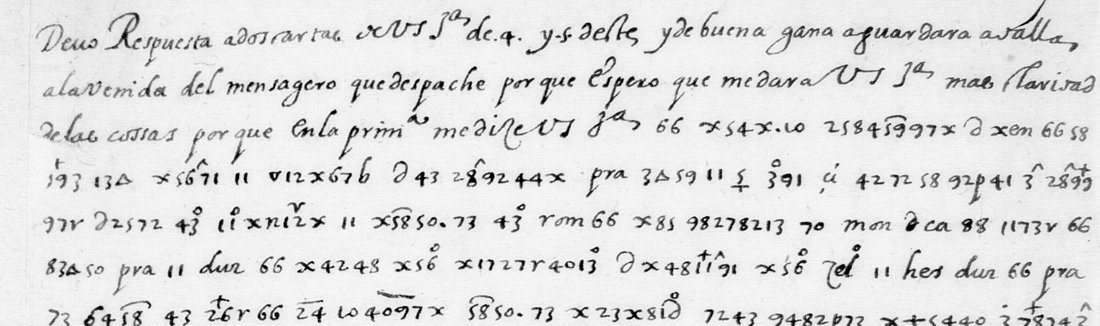
This leaf is in a different cipher, the Feria–Mansfeld key, whose numbering is unrelated: ba 24, ca 25, da 10, la 59, ma 49, que 66, and de the single figure 8. The letter opens in cleartext and changes to cipher mid-sentence:
“… a la venida del mensagero que despache, porque espero que me dara V.S.a mas claridad de las cossas, porque en la primera me dise V.S.a” — then que aguarda cavallería y … y no continua … que aya recivido su …
02 The cipher and the key
Satoshi Tomokiyo’s page on the ciphers of Philip II’s reign carries, as an image, a Syllabic cipher for Duke of Feria and Count of Mansfeld (1593), cited at fr. 3984 ff. 130 and 145. This leaf bears it out: its values run far higher than in the office cipher of 1592–93 (97, 98, 800, 7243), and it carries the three-letter word codes he describes (pra, rom, mon, xen, vul, cil; he gives vas = segnor as an example).
All twenty cipher lines were transcribed on 5 October 2026: 598 groups. Decoded with his table, they give Spanish: a mi no me parece que puede, se [ha] de poner todo lo que se puede, lo que podemos, aliento, y si ella apareciera, y palabra, no estamos desesperados, peligro, espero, de acudir a lo que esta, pareceria que venia a ayudar … y la cavalleria, a lo menos no parece sino. A Spanish character model of the period scores the decode at −2.500 per character; 200 keys with the same values shuffled among the numbers score at most −3.378. A free hill-climb over all numbers collapses onto que and was rejected; a constrained search for the numbers missing from the table fixed 57 = li (peligro, aliento). 64, probably ha by context, is not separated from na by the model and stays open.
Scored line by line for sense, 224 of the 598 groups (37.5%) give Spanish. The diacritic finals and doubling marks were left out of the transcription, so the words come out without their final consonant. Phrases scattered among unread word codes do not make sentences: read as a text, the letter is decoded, not read (reading audit, 22 October 2026), and the 37.5% is withdrawn as a reading figure.
03 A crib in the same volume (23 October 2026)
The other folio Tomokiyo cites for this key was opened on 23 October 2026. F. 130 is a letter of Mansfeld to Feria, Formentieres, 7 July 1593, wholly in this cipher, and f. 131r–v holds its contemporary French decipherment, together with that of Feria’s own letter of 10 July (cipher f. 143). The crib fixes 64 = ha, 63 = he, 62 = hi, 31 = jo, 19 = fa, 81 = vi, and the word codes xen = Infanteria, pun = hombre, mon = gente, tel = exercito, fon = Flandes, dir = Magestad, Vas = señor (mon and tel flagged for review). With them about a quarter of the letter’s sentences build; the partial reading is texts/no68_reading_b28.md (three-letter codes still open in angle brackets, [?word] doubtful):
A mi no me parece que puede con esta gente la [?tregua], me parece la que <gar> en <sil> de <vis> <77> de <cle> que puede ha[?…] y que <var> es to[?…].
No estamos desesperados de [?presente] <bel> de <pus>, solo nos de <77> ta de todas estas <vel>; el peligro que en ta <vir> <xur>, espero en Dios que ha de acudir a lo que esta[?…] de su <vis> [?…] poco <ful> <xas> <cel> lo que <pra> di[?…] <xur>.
The letter stays decoded, not read: the other three-letter groups (pra, xur, gar, dur, var, tor, vis …) carry much of the sense, and the 1593 French decipherer left them blank too.
04 What stays open
- The three-letter word codes other than those the f. 131 decipherment fixes (pra, dur, hes, gar, rom, vul, cil, var, vis, tor, xur …), which Tomokiyo does not tabulate and the decipherer of 1593 also left blank. The nearest candidate list, fr. 3995 f. 101 beside the Spanish office key, is an Italian nomenclature of another correspondence.
- The numbers 77 and 95 and the groups 200T, 800T: no candidate stands out.
- The diacritic finals are still to be added to the transcription from the image.
Full texts
The transcription and the decryption of every document on this page, so that the reading can be used and checked. Short files are shown here; all are in the repository.
Diego de Ibarra, Paris, 10 July 1593, BnF fr. 3984 no. 68, f. 145 decoded, not read
Ibarra writes from Paris during the Estates of 1593 in the Feria-Mansfeld cipher: the messenger he is despatching, cavalry awaited, 'no estamos desesperados', peril, and help that might come with the cavalry. The three-letter word codes, which carry much of the sense, have no published table and stay unread.
A mechanical decode with holes in most sentences: shown so that the transcription and the key can be checked and improved, not as a reading.
Transcription
# BnF fr. 3984 no. 68, f. 145 (canvas 268), Ibarra, Paris, 10 July 1593. Feria-Mansfeld cipher.
# Transcribed 5 Oct 2026 from the 3600-px crop img3984/r0268_pct25_24_61_48_w3600.jpg (half-width strips b145_*).
# Lines 1-3 of the leaf are clear. One cipher line per row, numbered as on the leaf. Diacritics dropped
# (they add finals or doubling); runs of digits split into pairs; letters and word groups kept as written.
# Single signs: x = a, 3 = e, r = o, n = e?, 2 = a, ∂ = y, ∆ = s, ʃ = e? (long s), ʒ = a? ; three-letter words = nomenclature.
L04	66 x 54 x 10 25 84 59 97 x ∂ xen 66 58
L05	93 13 ∆ x 56 71 11 ∇ 12 x 67 6 ∂ 43 28 92 44 x pra 3 ∆ 59 11 5 3 91 u 42 72 58 92 ʃ 41 3 28 99
L06	97 r ∂ 25 72 43 11 x n 12 x 11 x 58 50 73 43 rom 66 x 85 98 27 82 13 70 mon ∂ ca 88 11 73 r 66
L07	83 ∆ 50 pra 11 dur 66 x 42 48 x 56 x 17 27 r 40 13 ∂ x 48 11 91 x 56 ʒel 11 hes dur 66 pra
L08	73 64 58 43 26 r 66 24 10 40 97 x 58 50 73 x 23 x 81 ∂ 72 43 94 82 ʃ 73 x 54 40 3 78 74 3
L09	90 20 ʃ 75 93 66 3 23 83 58 79 98 27 ʃ 73 76 11 74 57 28 3 59 91 50 pra 76 27 ʃ 93 66 56 66 ʃi
L10	28 98 64 48 41 91 66 3 91 46 gar 26 25 ∂ 66 n pun 79 92 28 ∂ 11 28 17 x 25 66 82 r 3 12 x 64
L11	3 ʃol 11 11 23 x 41 48 12 13 91 40 800 ∇ 51 73 47 ∂ 200 vul ∂ 800 denp 66 59 25
L12	84 58 97 x 43 59 82 r xur 66 58 11 12 x 73 97 x 26 25 11 ʒ 47 cil ∂ 28 98 ʃi 95 ∂ 13 11 66
L13	71 23 76 94 ʃ 74 x 47 43 48 79 98 26 66 75 ʃ 11 28 3 90 mon
L14	59 98 54 x 48 79 98 26 59 que gar 3 sil 11 vis 77 11 cle 66 75 ʃ 11 64 13 73 ∂ 66 var 3 93 84 59
L15	73 64 11 76 41 93 13 56 66 73 75 ʃ 11 ∂ 76 4 2 54 25 71 26 r 83 41 46 3 ʃ 59 ∂ da 64 13 46 56 66 76 11 46
L16	∂ 73 78 73 83 99 72 ʒ ron 3 n 92 46 x 57 3 93 ∂ 72 3 59 x 79 98 27 x ∂ 79 59 24 11 ʃu 73 75 12 ʃ
L17	73 64 13 2 54 15 10 48 93 ce 43 3 90 46 11 73 78 99 13 11 78 73 91 bel 11 pus 71 56 43 11 77 90 8
L18	93 10 3 90 vel 3 78 57 53 3 66 3 90 vir xur 3 78 96 3 12 66 64 11 x 29 12 x 56 66 3 90 ∆
L19	11 70 vis 22 x 76 28 ʃul xas cel 56 66 pra 12 13 xur 70 75 ʃ 93 3 44 48 96 11 73 tel 3
L20	ʃon 79 98 26 97 x 66 83 42 x x 20 10 91 gur var n 40 tor ∂ 59 25 84 58 97 x ∂ xen ∂ en x
L21	43 73 97 x 15 ʃ 99 11 los ʒa pra 48 31 74 83 73 79 50 49 43 76 70 mos 11 56 72 43 x ∂ 50 12
L22	27 n ∇ 21 42 82 97 11 44 48 96 11 mon 66 66 72 83 66 72 56 64 13 ʒa 70 ʃ 58 59 xen x 56 48
L23	43 43 79 98 26 72 43 hus 73 99 90 11 tor
Decryption
# BnF fr. 3984 no. 68, f. 145: output of `python dec68.py fill68.json` (Tomokiyo's Feria-Mansfeld table keyM.tsv plus 57 = li), saved 22 Oct 2026. Cipher lines 4-23 (ll. 1-3 are clear); [bracketed] groups have no value (three-letter word codes and unread numbers). The hand reading of ll. 4-10, with the clear opening, is in reading68.md.

```
L04 que a gu a da ca va la ri a y [xen] que le
L05 to do s a lo so de o di a quo u y no co ti nu a [pra] e s la de · e te u ni si le ti e ne e co ra
L06 ri o y ca si no de a e di a de a le ga se no [rom] que a ya re ci vi do su [mon] y [ca] yo de se o que
L07 ve s ga [pra] de [dur] que a ni me a lo a fi ci o na do y a me de te a lo [ʒel] de [hes] [dur] que [pra]
L08 se [64] le no ce o que ba da na ri a le ga se a be a [81] y si no tu vi e se a gu na e pe sa e
L09 ta bu e pu to que e be ve le pa re ci e se po de sa li co e la te ga [pra] po ci e to que lo que [ʃi]
L10 co re [64] me ne te que e te mo [gar] ce ca y que e [pun] pa ti co y de co fi a ca que vi o e di a [64]
L11 e [ʃol] de de be a ne me di do te na [800] o ge se mi y [200] [vul] y [800] [denp] que la ca
L12 va le ri a no la vi o [xur] que le de di a se ri a ce ca de a mi [cil] y co re [ʃi] [95] y do de que
L13 so be po tu e sa a mi no me pa re ce que pu e de co e ta [mon]
L14 la re gu a me pa re ce la [que] [gar] e [sil] de [vis] [77] de [cle] que pu e de [64] do se y que [var] e to va la
L15 se [64] de po ne to do lo que se pu e de y po a a gu ca so ce o ve ne mo e e la y [da] [64] do mo lo que po de mo
L16 y se pe se ve ra si a [ron] e e ti mo a li e to y si e la a pa re ci a y pa la ba de [ʃu] se pu di e
L17 se [64] do a gu fu da me to [ce] no e ta mo de se pe ra do de pe se te [bel] de [pus] so lo no de [77] ta de
L18 to da e ta [vel] e pe li go e que e ta [vir] [xur] e pe ro e di que [64] de a cu di a lo que e ta s
L19 de su [vis] bi a po co [ʃul] [xas] [cel] lo que [pra] di do [xur] su pu e to e nu me ro de se [tel] e
L20 [ʃon] pa re ce ri a que ve ni a a bu da te [gur] [var] e na [tor] y la ca va le ri a y [xen] y [en] a
L21 no se ri a fu e ra de [los] [ʒa] [pra] me [31] sa ve se pa ga ma no po su [mos] de lo si no a y ga di
L22 ci e o bo ni vi ri de nu me ro de [mon] que que si ve que si lo [64] do [ʒa] su e le la [xen] a lo me
L23 no no pa re ce si no [hus] se ra ta de [tor]
tokens 598
```
Decryption
# fr. 3984 no. 68, f. 145 (canvas 268) — Don Diego de Ibarra, Paris, 10 July 1593

**A different cipher from the other three.** This leaf uses the *Cipher between the Count of Mansfeld and the
Duke of Feria (1593)*, which Tomokiyo published as `spanish3mansfeld.png` and cites at fr. 3984 ff. 130 and
145. Its numbering is unrelated to the 1592-93 cipher: here ba = 24, ca = 25, da = 10, la = 59, ma = 49,
na = 40, pa = 79, ra = 99, sa = 74, ta = 90, va = 84, ya = 85, que = 66, and *de* is the single figure 8.
Letters: a = x / 2, e = p / 3, o = r, u = n, y = ∂. Marks: `~` doubles the consonant, `+` final -l,
`v` final -n, `.` final -r, `°` final -s, bar = the number itself. Transcribed to `keyM.tsv`; `decodeM.py`
applies it.

The letter opens **in clear** and drops into cipher mid-sentence:

> *“… a la venida del mensagero que despache, porque espero que me dara V.S.a mas claridad de las
> cossas, porque en la primera me dise V.S.a …”*

| line | cipher | reading |
|---|---|---|
| 4 | 66 x 54 x. 10 25 84 59 97 x ∂ xen 66 58 | **que aguarda cavallería y** · **que le** |
| 5 | ʃ93 13∆ x 56 71 11 ∇12 x 67 6 ∂43 28 92 44 x pra 3∆ 59 11 ʒ 3̊91 u 42 72 58 92ʃ41 ʒ 2899 | **todos a lo so de** · **a** · **y no continua** · **es la de** · **ni si le ti**· |
| 6 | 97r ∂2572 43 ï ï x n12 x 11 x 58 50. 73 43 rom 66 x 85 98 27 82 13 70 mon ∂ca 88 1173r 66 | **rio y casi si no** · **a ni di a de alegan se no** · **que aya recivido su** · **yo** · **que** |

| 7 | 83∆ 50 pra 11 dur 66 x 42 48 x 56 x 11 27 7r 40 13 ∂ x 48 11 ï 91 x 56̊ ʒel 11 hes dur 66 pra | **tos ga** · **de** · **que a ni me a lo a de ci** · **na do y a lo de** · · **de** · · **que** · |
| 8 | 73 64 58 43 2̄6r 66 2̄4 10 40 97 x 58 50. 73 x 23 x 81∂ 72 43 94 82 ʃ73 | **se na le no** [26]**r que** [24] **da na ria le gan se a be a te y si no tuvi**· |
| 9 | 90^ 20 ʃ^ 75 93 66 3^ 2̄3 83 58 79 98 27 ʃ 73 76 11. 74 57. 28 3̊ 59 91 ʃ 50 pra | **tas bu**· **pu to que es** [23] **to le pa re ci** [en] **se po den** · **la te** [en] **ga** · |
| 10 | 28 98 64 48 41 91. 66 3̊ 91 46 8̊ gar 26. 25 ∂66 n̂ pun 7 99 22 8 ∂ 11 28 17 x 25 66 82r | **co re na me ne ten que e te mo** · · **cen ca y que es** · **ra bi** [de] **y de co ci a ca que vio** |

## The limit on this letter

Lines 7-10 decode to clean syllables but not to continuous Spanish, and the reason is structural rather than
palaeographic: this cipher's **nomenclature is not published anywhere**. Its three-letter groups — *pra, dur,
hes, ʒel, gar, pun, rom, mon, xen, vul, cil, denp* — carry much of the sense, and Tomokiyo notes only one of
them in passing (*vas* = *segnor*) without tabulating the rest.

**Checked and excluded:** BnF fr. 3995 f. 101 (canvas 194), the large multi-column nomenclature on the leaves
adjacent to the Spanish office key, is **Italian, not Spanish** — *Austria, Ambasciatore, Assemblea,
Battaglia, Bisogno, Borbone, Borgo o Sobborgo, Cardinale di, Castello, Cattolici, Concilio generale,
Congregazione generale, Corte di* — so it belongs to another correspondence and does not serve this cipher.
The Feria-Mansfeld nomenclature has still to be found.

## Sense

Ibarra writes from Paris on 10 July 1593, at the height of the Estates, about **the coming of the messenger
he is despatching**, hoping for **more clarity on matters**; **cavalry being awaited**; something that **does
not continue**; and **that he may have received his** …
Key: keyM.tsv, fill68.json
04 Sources
- BnF, Français 3984, btv1b9060633d, no. 68 at canvas 268 (f. 145).
- S. Tomokiyo, “Spanish Ciphers during the Reign of Philip II”, cryptiana (
spanish3.htm), the key imagespanish3mansfeld.png. - Arya Sanketbhai Patel, pull request 8 (19 September 2026): the identification of the cipher and the first transcription of Tomokiyo’s table.
Transcription, key, decoder, controls and the sense count: targets/ibarra1593/ in the repository.