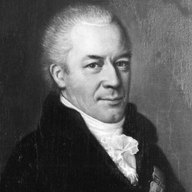
01 The document
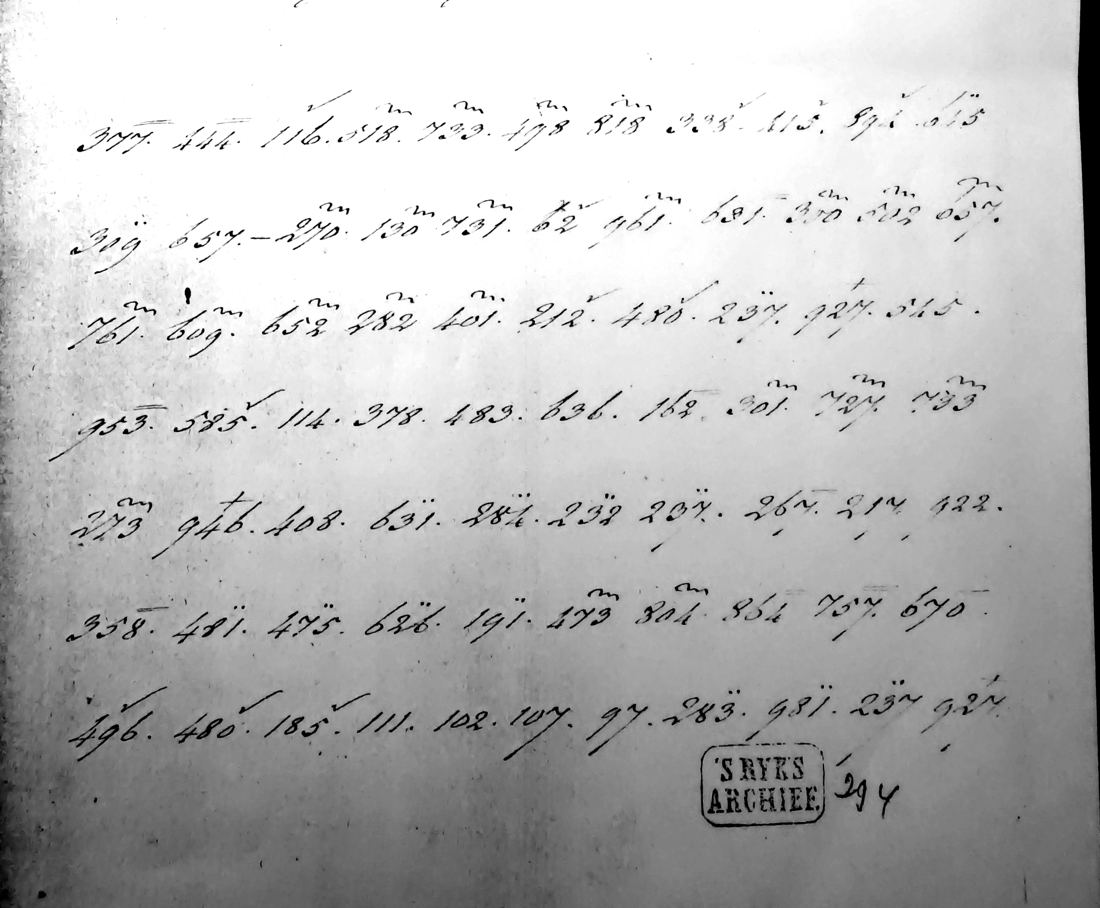
Bourdeaux wrote to Maarten van der Goes, the Batavian Republic’s agent for foreign relations. The two DECODE images of R1944 carry about 110 numerical groups, each with a bar, tick, wave, dot or cross above the figures, then the closing “à bien respect” and his signature. DECODE records the nomenclator as numerical and “likely devised by S. E. Croiset”, the Dutch ministry’s cipher clerk.
02 The clear copy, filed under R1946
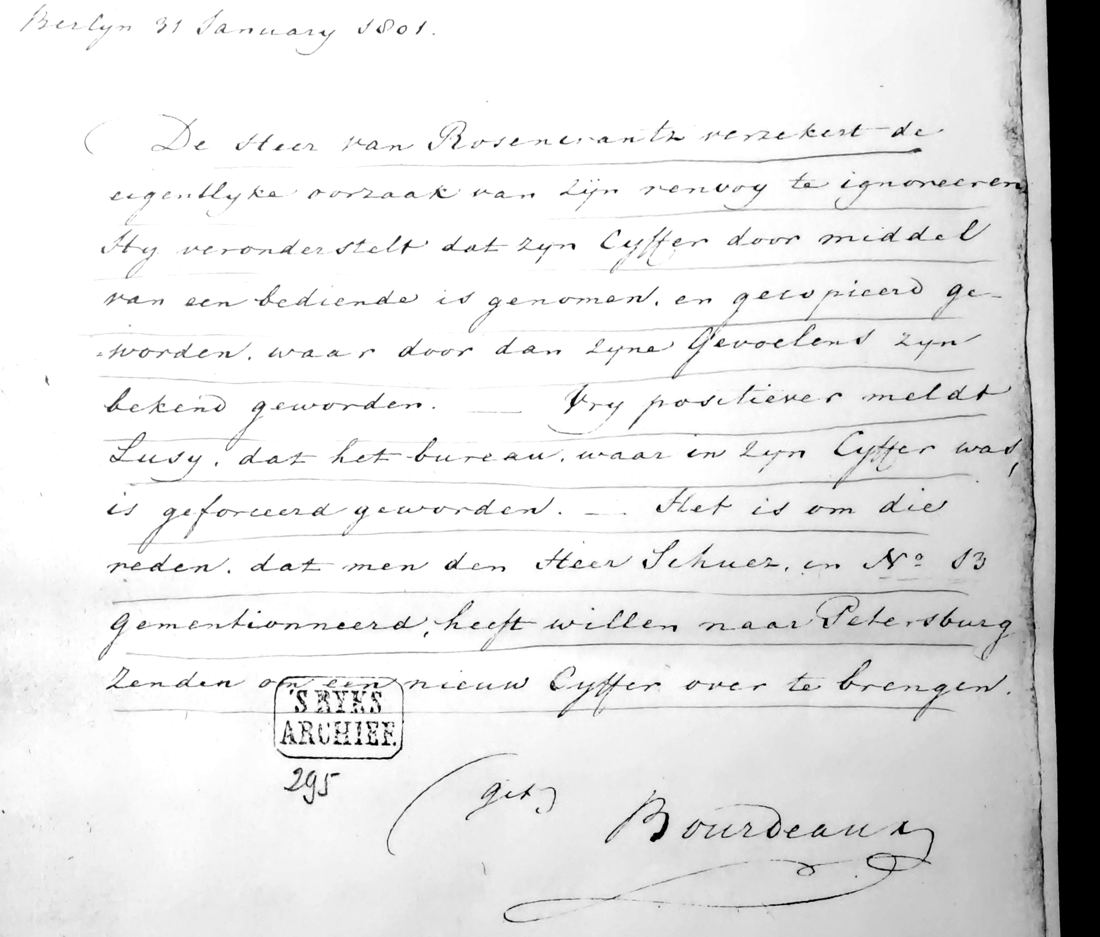
The next dispatch in the volume, of 7 February 1801, is DECODE R1946. Its third image is not part of that letter. It is a clear sheet headed “Van den Chargé d’aff. Bourdeaux” and numbered 16, with the date of R1944. It closes “(get.) Bourdeaux”, the geteekend of a ministry copy, and it carries the stamped folio 295, directly after R1944’s 294.
03 The text
N°. 16. Berlyn 31 January 1801.
De Heer van Rosencrantz verzekert de eigentlyke oorzaak van zyn renvoy te ignoreeren. Hy veronderstelt dat zyn Cyffer door middel van een bediende is genomen, en gecopieerd geworden, waar door dan zyne Gevoelens zyn bekend geworden. — Vry positiever meldt Lusy, dat het bureau, waar in zyn Cyffer was, is geforceerd geworden. — Het is om die reden, dat men den Heer Schuer, in N°. 13 gementionneerd, heeft willen naar Petersburg zenden om een nieuw Cyffer over te brengen.
(get.) Bourdeaux
Translation. Mr van Rosencrantz assures us that he does not know the real cause of his dismissal. He supposes that his cipher was taken by a servant and copied, and that his views became known that way. Lusi reports, much more definitely, that the desk in which his cipher was kept had been forced open. That is why they had wanted to send Mr Schuer, mentioned in no. 13, to Petersburg to carry a new cipher.
The people are identified from context, not from print (grade C). Rosencrantz is most likely the Danish diplomat Niels Rosenkrantz, whom Paul I sent away from St Petersburg at the end of 1800. Lusy is Count Spiridon Lusi, the Prussian envoy there. Schuer is not identified.
04 What remains
- Every word of the clear sheet is legible (grade H). The cipher was not decoded against it: the groups have not been transcribed with their marks, and the key is not identified among DECODE’s key records. The clear sheet and the cipher share the number, the date, the sender and consecutive folios, so the identification is secure. A group-by-group alignment would also recover part of the key.
- Dispatch no. 13, which introduces Schuer, has not been located.
05 Sources
- Nationaal Archief, The Hague, 2.01.08 Ministerie van Buitenlandse Zaken 1796–1810, inv. 257: DECODE R1944 (cipher, fol. 294) and DECODE R1946, image 3 (clear copy, fol. 295). Images need a DECODE login.
Notes: R1944/ in the repository.