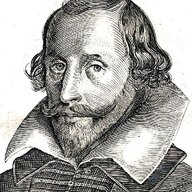

01 The record, and what was known about it
Kurbayern Äußeres Archiv 4591 is the Bavarian ducal chancery’s collection of cipher keys, running from the 1530s to about 1620; DECODE has 102 key records from it (R9277–R9423), with a scatter of ciphertexts bound in among the keys. Two of those ciphertexts are dated 1619 and lie at the very end of the volume:
| Record | Folios | Pages | DECODE status | What it is |
|---|---|---|---|---|
| R9425 | 278–280 | 4 | Decrypted | the same correspondence, with a contemporary abstract in red in the left margin |
| R9426 | 281–286 | 10 | Non-decrypted | the letter read here |
R9426’s record gives “Author: …”, no sender, no receiver, no origin city, no plaintext language, cipher type “Unknown”, symbol set “Numerical”. The images are behind a login and carry the archive’s reservation (“The image is not in the public domain. Publishing it is only possible with the permission of the Archive”), so no page of the manuscript is reproduced here. Eleven images cover ten pages: image 7 is a second photograph of the page on image 6, and pages 3 to 10 were photographed upside down.
The last page is not in cipher. It closes:
… und E. L. hierbei zu Bezeigung aller angenehmer freundbrüderlicher Dienste jederzeit geneigt. Geben in meiner Statt Bonn den 22. Decembris Anno 1619.
… williger Bruder und Diener — Ferdinand
Bonn was the Cologne elector’s residence. Ferdinand of Bavaria (1577–1650) had been Elector-Archbishop of Cologne since 1612 and held Paderborn, Münster, Hildesheim and Liège with it; Maximilian I, head of the Catholic League, was his elder brother, which is what “herr Schwager” and “freundbrüderlich” in the clear passages, and the letter’s presence in the Munich archive, together establish. The ciphered text confirms the identification from the inside: the writer speaks of mein Thumb[capitel], meine Landtstendt, meinem … Ertz[stift], of calling meinen Landtag, and of Paderborn: an ecclesiastical prince with a cathedral chapter, territorial estates and a diet to summon.
02 The cipher
Every cipher group is a number written between dots. The letters are the even two-digit numbers, in two series; the odd two-digit numbers and the three-digit numbers are the nomenclator, so the two can never be confused.
| a | b | c | d | e | f |
|---|---|---|---|---|---|
| 10 | 12 | 14 | 16 | 18 | 20 |
| g | h | i | l | m | n | o | p | q | r | s | t | u | x | z |
|---|---|---|---|---|---|---|---|---|---|---|---|---|---|---|
| 30 | 32 | 34 | 36 | 38 | 40 | 42 | 44 | 46 | 48 | 50 | 52 | 54 | 56 | 58 |
and a second series that supplies the homophones and the two letters the first series omits: a 60, 70 · e 62, 72 · i 64 · o 66, 76 · u 68 · k 74 · w 78. So each vowel has two or three equivalents and each consonant one. The values 22 to 28 never occur. Two symbols recur at every word boundary and carry no letter value; they are the word division. Single cipher letters also stand alone as initials, so that “E. L.” (Euer Liebden, the form the brothers use for one another) is written 18 . 36.
The design is conservative for 1619: an alphabet in order, with homophones only on the vowels, is a sixteenth-century habit, and it is what lets the key be recovered from 2,500 letters. The nomenclator covers what the alphabet does not: the groups stand exactly where a name, a title or an office belongs.
03 How the key was recovered
There was no key and no crib. The ten pages were transcribed line by line, with the clear passages bracketed
and the cipher copied as written. A homophonic solver (simulated annealing) then searched for the assignment of numbers to letters that maximises
the probability of the whole text under the repository’s de-1500s model, a five-gram character model
built on German printed and chancery prose of 1470–1610. Six restarts over the first three pages (932 letters) were already
producing German: gelegenen, Landtag ausschreiben, Quartiermeister. Ten restarts over all ten pages
(2,482 letters) fixed the table, and the decryption gave continuous German.
What remained were transcription errors. This clerk’s 0 and 6, 3 and 5, 1 and 4, 2 and 7 are nearly the same stroke, and a mis-transcribed digit turns one letter into another. The decoder flagged every word the language model scores poorly, a repair pass proposed single-token substitutions restricted to those confusable digit pairs, and about sixty were accepted. They are corrections of the transcription, never of the key, and a sample of them was checked again on the images at full zoom (catolischen, einzuquartiern, wolermelt, Erwitte).
The control. The key was then applied, without changing a single value, to the neighbouring record R9425, a different letter of the same correspondence that this work had not touched. Its first cipher line is
60·36·12·48·18·14·32·52 54·42·40 30·66·52·52·18·50 30·40·10·16·18·40
→ “Albrecht von Gottes Gnaden”
This is Archduke Albert of Austria, sovereign of the Spanish Netherlands, whose troops are the subject of that letter. A key recovered from one text and applied unchanged to another that gives a correct opening formula and a correct name is the strongest check available here.
04 The letter
Ferdinand has had Maximilian’s letter of the 10th “gestrigen tags”. The first half is logistics, and it is specific. On the frontier of the county of Horn and at Montfort companies are to be accommodated; the levies (Werbungen) are “nit sufficient”; the agent, Licentiat Morres, reports and is to negotiate. Troops are to be quartered in the villages nearest the city and at Deutz, across the Rhine from Cologne, under a particular ordinance for the quartermaster, and the march (Fortzug) is to follow when they are ready. Pay is fixed:
… iedtwedern zwei Kopfstückh oder zwei Ort [eines] Königs-Dalers täglich zu versprechen …
Then the constraint that runs through the whole letter: Ferdinand will not let his own territory be eaten. He must keep his Domkapitel and Landstände “in guetem Willen und Devotion”, he is about to call a Landtag, and his Estates must “nit alienirt werden”. Lintelo’s company is placed near the city; Herberstorff and other recruitments are to have every possible support, and “daran nichts erwinden lassen”. For Paderborn he asks a year’s respite, where troops are already levied and a contribution and a mustering-place have been granted; he can give no firm promise about the rest.
The second half is the argument for the war, and it is the passage the reveal below decrypts symbol by symbol. If the other side is reprimirt and the adversary is strengthened with so considerable a reinforcement while Catholic power is diminished, then
… den Catolischen ins gemein und ohne underschied [wird] geringer Zeit übrig sein, sich [vor] des andern Theils Einfal, Gwalt und Betrangnus zu entweren.
He hopes instead for the gemeine Zusammensetzung, the common union, for “Conservation unser … catolischer Religion und Seelen Seligkeit” and for posterity. His agent’s relation shows that a resolution cannot wait: levies are to be feared “für dem Früeling”, before the spring. The closing ciphered lines name Alexandro, the King, his lands, and “die Austilgung der ca[t]olischen Religion”.
The date matters. Frederick V of the Palatinate had been crowned in Prague on 4 November 1619; Maximilian and Ferdinand II signed the Munich treaty in October and the League was mobilising through that winter. Ferdinand was one of the two brothers who were about to pay for and lead that mobilisation, and here works out in cipher where the men will sleep, what they will be paid a day, and how much of it his own bishopric can be made to carry.
05 What remains uncertain
Measured over the enciphered text (count.py), 2,504 of 2,614 cipher tokens give sense: 95.8%.
The letters are nearly complete, 2,483 of 2,519. Two kinds of item are open.
The nomenclator (31 of 32 groups, 74 tokens, 2.8% of the text). The groups that occur are 102, 122, 136, 142, 146, 154, 160, 165, 183, 200, 213, 215, 216, 221, 225, 232, 238, 239, 248, 258, 410, 412, 414, 415, 416, 417, 419 and the two-digit 33, 47, 49, 51, 57. Only 248 = und is established, and that from its own contexts (“Gwalt 248 Betrangnus”, “Eifer 248 Ernst”, “248 in kurzer Zeit”). Two more are probable and are deliberately not counted as deciphered: 414, which occurs twelve times where a person or a title belongs, and 232, which follows the ciphered letters ertz often enough to be stift. No key for this cipher survives: the volume’s own key records were checked (R9419 at f. 267 is a Latin nomenclator on 1–99; R9420–R9423 are 1530s–1583 alphabets already worked through for the earlier letters in this file), and the sibling R9425’s red margin, enhanced by channel separation, is a contemporary abstract of that letter, not a group-by-group decipherment.
Three names and four words. Three words decrypt as proper names whose bearers are not identified: Leicker (the Doctor Ferdinand sends to negotiate), Dernersen (named beside Herberstorff), and Marreo/Morres (the agent). Four words, 37 tokens in all, do not decrypt to German: at P1.22, P2.05, P3.05 and P4.23. Each has a single mis-transcribed digit inside a word; at this scan resolution the strokes are ambiguous, and a return to the originals would settle them.
Neither 1619 letter was found in print. Briefe und Akten zur Geschichte des Dreißigjährigen Krieges, Neue Folge I/1 (ed. Georg Franz, Munich 1966), which covers January 1618 to December 1620, cites the Munich files by the old “Kasten schwarz” numbers rather than the current KAA shelfmarks, and nothing in its searchable text for November–December 1619 answers to this letter; Hurter’s Ferdinand II viii, Wolf and Breyer’s Maximilian I iv and Pastor were checked as well. “Kurbayern Äußeres Archiv 4591” is cited nowhere in the literature that can be searched.
06 Sources
- Bayerisches Hauptstaatsarchiv, Kurbayern Äußeres Archiv 4591, ff. 281–286: DECODE R9426 (login; images not in the public domain).
- The same, ff. 278–280: DECODE R9425, the sibling letter used as the control.
- The volume’s key records R9419–R9423, checked against this cipher and ruled out; the earlier ciphertexts in the same volume are written up at KAA 4591 and KAA 4591 (three letters).
- Briefe und Akten zur Geschichte des Dreißigjährigen Krieges, Neue Folge, Teil 1 Bd. 1: Januar 1618 – Dezember 1620, ed. Georg Franz from Karl Mayr-Deisinger’s papers (Munich 1966); searched, no match.
- Language model: this repository’s
lang/de-1500s(German 1470–1610, five-gram characters).
Transcription, key, solver, reading and the measurement are in
ferdinand1619/.
The manuscript images are not reproduced: the archive reserves them.