01 The manuscript
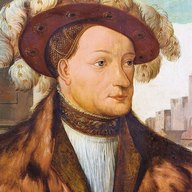
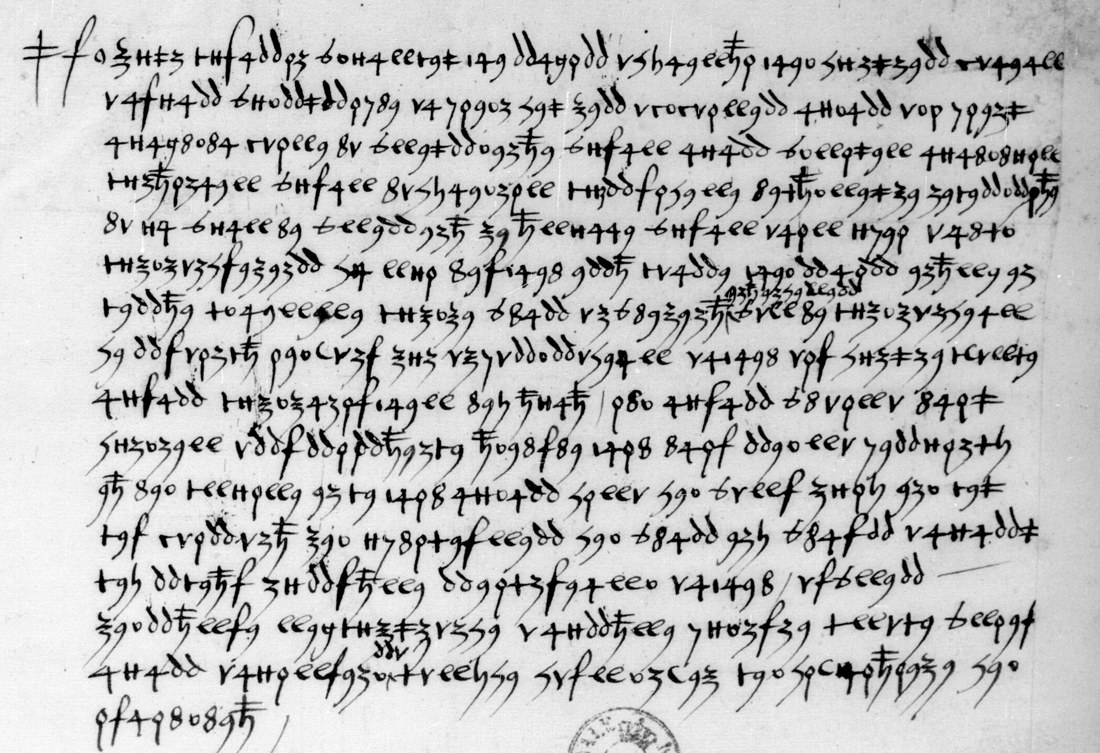
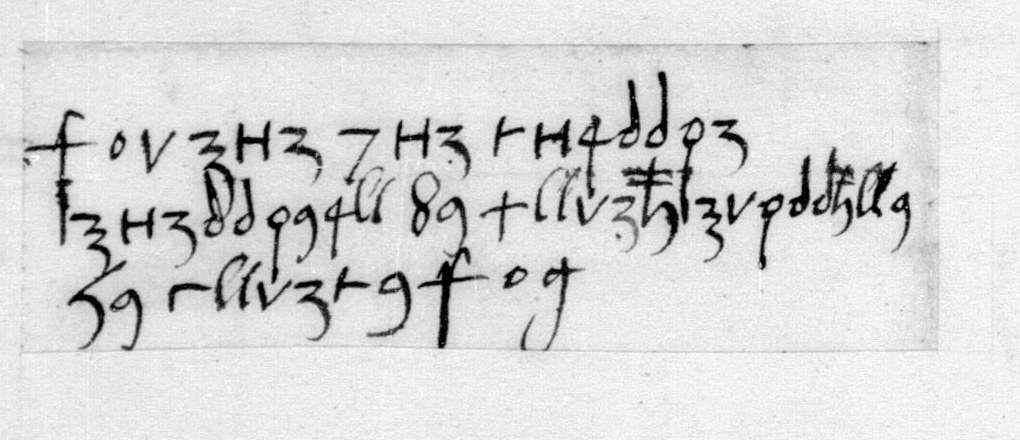
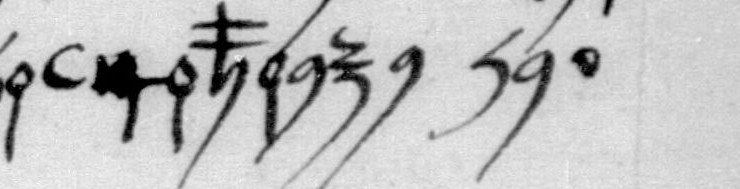
The BnF catalogue places item 8 at folio 16. Gallica view 27 contains the body; view 28 contains the address. The clear closing and signature identify Charles. The separate letter at folio 24, views 39–40, is dated 3 April 1537 and also addresses the grand master, but is not a clear copy of this cipher. Its year cannot be transferred to this letter.
02 The French plaintext
Spaces and capitals are editorial; u/v are left as u in the cipher transcription. Braces mark raised insertions. Square brackets mark the blotted sign interpreted as u. All values are inferred (I), with the doubts below graded M. Unusual spellings and the repeated “en ce / ce faisant” are preserved.
| Line | Literal working reading |
|---|---|
| 01 | Mon cousin pource que sueis aduerti que donnes faueur |
| 02 | a uous possible au bien de mes affaires uous ai bien |
| 03 | uouellu faire la presente pour uous prier uoulloir |
| 04 | continuer pour laduenir cosidere lextreme necessite |
| 05 | la ou pour le present me trouue pour auir obei aulc |
| 06 | commandemens du roi lequel est cause que suis entre en |
| 07 | ceste guerre comme plus amplement {entenderes} par le commandeur |
| 08 | de sainct Iehan mon ambassadeur auquel ai donne charge |
| 09 | uous communiquer le tout il uous plaira lui |
| 10 | donner assistence telle quil lui sera besoing |
| 11 | et le croire en ce quil uous dira de par moi en ce |
| 12 | ce faisant me obligeres de plus en plus a uous |
| 13 | ce scet nostre seigneur auquel apres |
| 14 | mestre recommande a uostre bonne grace prie |
| 15 | uous auoir en {sa} garde darnhem ce dih[u]itieme de |
| 16 | iuillet |
Clear closing, abbreviation expanded: Le tout v[ost]re bon cousin. Signature: CHARLES.
Address: A mon bon cousin / Monsieur le grant maistre / de France.
03 Meaning in English
My cousin, having been informed that you give all possible support to my affairs, I wished to write and ask you to continue in the future, considering the extreme need in which I now find myself after obeying certain commands of the king, which caused me to enter this war. You will learn more fully from the commander of Saint John, my ambassador, whom I have instructed to communicate everything to you. Please give him such assistance as he needs and believe what he tells you on my behalf. By doing this you will oblige me increasingly to you, as our Lord knows. Having commended myself to your good grace, I pray that he keep you in his protection. From Arnhem, this eighteenth day of July [year absent].
This translates the apparent sense, not every literal anomaly. “Certain” interprets the unexpanded aulc; “eighteenth” interprets dih[u]itieme. The cipher gives titles, not the personal names of the recipient or ambassador.
04 How the key was recovered
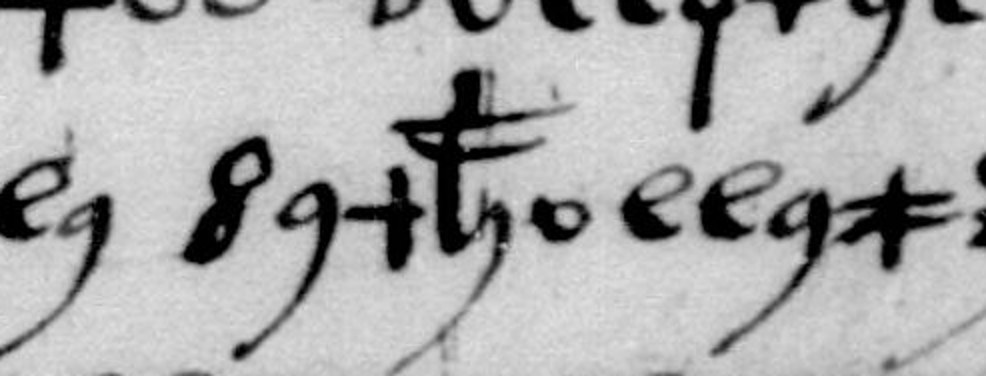
Short French, German and Italian substitution probes on rough transcriptions gave no reliable decryption. Extending the transcript to all sixteen lines gave French fragments under a five-gram model. Image comparison then corrected compound signs and nulls: the paired looped stems labelled DD give s, and the paired arches CE give r. Tall looped f forms, small circles and several other shapes are nulls. Early drafts had confused m/n zigzags, seven/b with corner/f, and angular u with a plain cross/g.
The address and body share letter values and null behaviour. Their coherent decryptions cross-check each other, but are not independent known plaintext. A synthetic 180-letter French substitution control was recovered exactly by the probe; it checks the solver implementation only. The searches recorded in the notes found no earlier decipherment, but one existed. George Lasry had recovered the key in 2023. His reconstructed key for the Duke of Guelders’ cipher (BnF fr. 3015) is published in section 2 of S. Tomokiyo’s “George Lasry’s codebreaking”. It notes that many symbols in the ciphertext are needlessly doubled. The work on this page is therefore an independent re-solution. It has not yet been checked symbol by symbol against Lasry’s table.
The final body transcript contains 726 labelled signs, including both insertions; the address has 48. The body uses 27 label names, including variants of u and a special label for the blotted occurrence. This is a transcription inventory, not 27 proven distinct historical characters.
Replay labels and inferred values
These labels are research identifiers, not facsimile glyphs. Shape descriptions and occurrence corrections are in the repository.
| Label | Value |
|---|---|
X | null |
F | null |
O | null |
S | m |
H | o |
Z | n |
T | c |
A | u |
DD | s |
P | i |
B | p |
CE | r |
Q | e |
I | q |
V | a |
K | null |
R | t |
L | f |
+ | u |
8 | l |
W | d |
G | h |
Y | b |
J | g |
U | null |
EX | x |
A_blotted | [u] |
python targets/egmond/decode_audited.py replays every main-line token and both insertions, checks their anchors and checks that the word-divided edition contains exactly the replayed letters. This guards transcription-to-edition fidelity; it is not independent proof of the inferred key.

05 Uncertainties and limits
- M, line 4: x in lextreme is assigned to a small sign with its bar extending left from the upright. Native-image inspection distinguishes it from the plain cross/g, but its value is supported by one occurrence and context.
- M, line 15: the u in dih[u]itieme is ink-heavy. The decryption points to 18 July; no year is present. The catalogue’s tentative 1520s label is not established by this decipherment.
- M, insertion 7: the small e after t overlaps another line’s descender.
- I/M: several m/n zigzags are distinguished partly by context. All main lines were inspected, but this remains an inferred key without an independent historical control.
- The literal forms sueis, uouellu, cosidere, auir, aulc and the repetition en ce / ce faisant survive native-resolution re-inspection. They may reflect spelling, abbreviation, enciphering slips or residual transcription error. The edition does not choose silently between those possibilities.
- No personal names are substituted for “grand master of France” or “commander of Saint John”. A complete year and the precise campaign remain unestablished.
- Prior solution. Lasry recovered the key in 2023 (see How the key was recovered). The next check is to compare his key with the values inferred here.
06 Sources
- G. Lasry, key to the Duke of Guelders’ cipher, BnF fr. 3015 (2023), on S. Tomokiyo’s cryptiana, GL.htm §2.
- BnF, Français 3015 catalogue, item 8, folio 16; component FRBNFEAD000049473_d0e176.
- Gallica view 27: letter; view 28: ciphered address. Native body image: 4351 × 6122 pixels.
- Views 39–40: separate clear letter, 3 April 1537, used for context only.
Transcriptions, inferred key, failed probes, audit trail and replay script: targets/egmond/ in the repository. Manuscript crops: Bibliothèque nationale de France / Gallica.