01 The documents
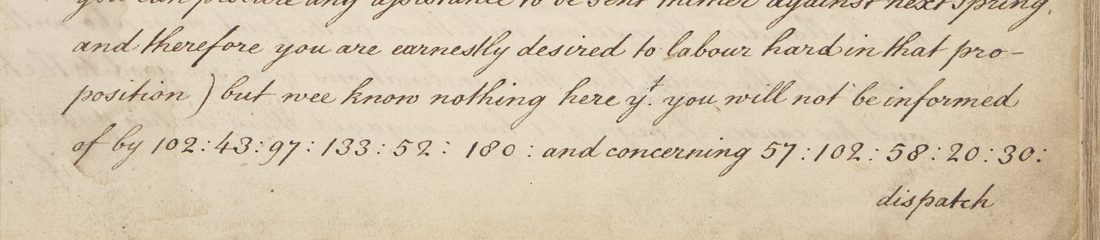
R7768 images f. 314r and f. 314v. R7769 images f. 314v and f. 315r, so the middle leaf appears on both records (the two files are byte-identical). The first letter runs from f. 314r to the top of f. 314v, and under it another hand has written “mr Cowleys Hand”. DECODE read that note as “Conleys” and made it the author. The second letter starts lower on f. 314v and ends on f. 315r with a postscript. Below that, f. 315r starts an unrelated letter (“My Lo:”) from a royalist waiting at the Hague. It has no numbers on the imaged part.
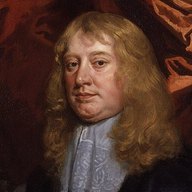
The writer is at the Queen’s court. “She intends to write to you”, and he has promised the recipient money. That fits Jermyn’s household, where Cowley wrote. The recipient is in Holland and short of money, and has a son for whom he has asked a favour of the King and Queen. He is neither Secretary Nicholas nor the Chancellor, since both are named in the third person. He is not identified.
02 The letters
The full text is in conley1652/transcription.txt. Their content:
- 28 December 1652. The “unlucky and unseasonable sending of Monsieur Bourdeaux into England” has not yet harmed the royalists in Holland. An outright Dutch victory at sea would have been dangerous “to us”. Mazarin has not yet returned to Paris. Cardinal de Retz is in prison. The King will go to the Parlement to register edicts worth seven or eight millions. The army is before Sainte-Menehould. Then comes the cipher: “I wish I could send you any Account of the present estate of 228:196:188 (for it is undoubtedly of great importance if you can procure any assistance to be sent thither against next spring …) but wee know nothing here that you will not be informed of by 102:43:97:133:52:180 and concerning 57:102:58:20:30 dispatch back (who was the person that came lately from 248:88:46:47:96:52:7:57) Mr Chanchellour has given an Account of it to Secretary Nicolas.” The letter ends with a promise of money “by the next”.
- 3 May 1653. The writer still believes the King ought to have gone into Holland in person, although it is now too late. The Court has gone to Fontainebleau. The Count de Brienne reports that “the Bourdelois have resolved to declare themselves a Republique” under English protection; it is certain only that they have sent a person into England. The request for the recipient’s son “receives noe difficulty either with the King or Queen”. Postscript: “You may doe well to write a word to Mr 203.”
03 The cipher
| run | context |
|---|---|
| 228:196:188 | a country or region: “the present estate of ___ … assistance to be sent thither against next spring” |
| 102:43:97:133:52:180 | a person: “informed of by ___” |
| 57:102:58:20:30 | a person: “concerning ___ dispatch back” |
| 248:88:46:47:96:52:7:57 | a place: “the person that came lately from ___” |
| 203 | a person: “write a word to Mr ___” |
There are 23 numbers, 20 of them distinct, running from 7 to 248. The runs of five, six and eight look like names spelled out letter by letter, and the three-number run and the single 203 look like code words. Three values repeat: 102, 52 and 57.
Hypothesis (grade M). The eight-number place is “Scotland” (s c o t l a n d). In the winter of 1652–53 the Glencairn rising was being raised in the Highlands, and the court at Paris was looking for help for it by the spring. That would make 52 = a and 57 = d, and the run 57:102:58:20:30 would begin with d. The other runs share too few letters to test it, so it stays a guess from context.
04 What was tried
- Print. Cowley’s fifteen known letters to Henry Bennet, 30 April 1650 to 13 September 1653, are printed in Miscellanea Aulica (1702). A search of the archive.org full text found neither of these letters. Web searches for their distinctive clear phrases also found nothing. The Clarendon State Papers calendar and Nethercot’s list of Cowley’s letters (1928) were not checked.
- A related key. The royalist Hyde–Barwick cipher of 1659, which the repository already holds, gives meaningless syllables (“much at vi”, “ma p ka ar s ru”). Ruled out.
- Ciphertext only. Not attempted: 23 numbers cannot fix a key.
05 What is needed
A Jermyn or Queen’s cipher of 1652–53, such as the royalist keys in the Clarendon and Nicholas papers, or the original letters, if they carry a decipherment. Identifying the recipient, a royalist in Holland with a son, would show where to look.
06 Sources
- British Library, Harley MS 7003 ff. 314r–315r; DECODE R7768 and R7769 (images behind a login).
- T. Brown (ed.), Miscellanea Aulica (London, 1702), pp. 130–160, Cowley to Bennet: archive.org.
- CELM, Abraham Cowley: his letters, his secretarial work for Jermyn and the Queen, and Sprat on his ciphering.
Transcription, the code runs, notes and profile: conley1652/.