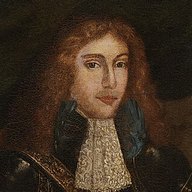
At a glanceCiphertext-only break · complete
- The letters
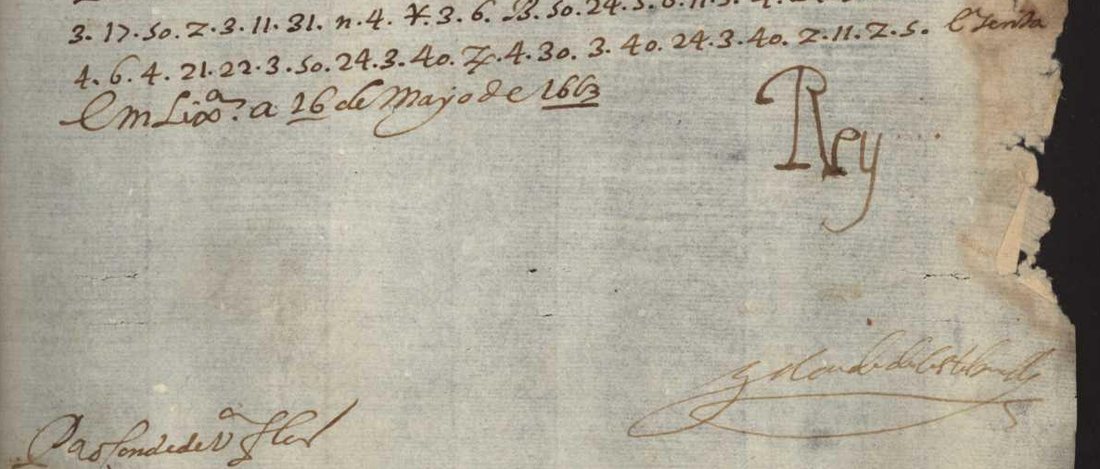
- Four letters of Afonso VI, signed Rey and countersigned by the Count of Castelo Melhor, to Sancho Manuel de Vilhena, Count of Vila Flor, governor of arms of the Alentejo: 13 May, 15 May (a long letter and a short note) and 26 May 1663, while Don John of Austria besieged and took Évora.
- Where
- Arquivo Nacional Torre do Tombo, Luís de Miranda Pereira, liv. 2 (PT/TT/LMP/0002), on DigitArq: images 87; 53–57 and 59; 69 and 71; 37 and 39. Three of the four letters survive in two ciphered copies. Catalogue no. 391, which dated them 1660–61: they are of May 1663.
- The cipher
- A letter-for-letter substitution on Portuguese with a few homophones: numbers from 2 to 53 and letter-like symbols, separated by points. The greeting and the date stay in clear, and in the long letter whole paragraphs.
- How it was deciphered
- Brice Dudout recovered the key from the 26 May letter alone, froze it, and tested it on the 13 May letter, which had been transcribed without it. Second copies enciphered with other homophones, and a sentence clear in one copy and in cipher in the other, confirm it.
- What it says
- Cavalry on its way, money for the pay, and a plan for the King to come to Setúbal; then the order to relieve Évora “a todo o risco”, even at the cost of a battle, repeated on 26 May as the King’s final resolution.
- Still open
- One symbol used once (ʒ) and a struck-out name in the 13 May letter; about fifteen encipherer’s slips there corrected from the sense. Of the long 15 May letter, only a 174-symbol passage is transcribed in the repository.
- Credit
- Brice Dudout (Europe chiffrée), working with Claude Opus 5.5: transcription, key, decipherment, Portuguese text, translation and notes. His write-up.
01 The letters and the book
In spring 1663 Don John Joseph of Austria invaded the Alentejo. From Lisbon the court, governed by the Count of Castelo Melhor, escrivão da puridade, in the name of the young Afonso VI, wrote almost daily to the general of the Portuguese army, the Count of Vila Flor. Book 2 of the Luís de Miranda Pereira collection at the Torre do Tombo (864 images on DigitArq) keeps letters of that correspondence, among them four in cipher. Each is signed Rey, countersigned by Castelo Melhor and addressed P[ar]a o Conde de V[ila] Flor.
| date | images | symbols in the repository | key | subject |
|---|---|---|---|---|
| 13 May 1663 | 87 | 636 | K2 | the cavalry sent as reinforcements |
| 15 May 1663, letter | 53, 54, 59 (copy 1); 55, 56, 57 (copy 2) | 174, one passage of copy 2 | K3 | reinforcements, money, the King at Setúbal |
| 15 May 1663, note | 69 (second copy 71) | 509 | K1, K2 | relieve Évora at all risk |
| 26 May 1663 | 37 (second copy 39) | 634 | K1 | the King’s final resolution |
Most letters were sent twice, the original and a via by another courier, and both copies are bound here, each enciphered separately with other homophones and other line breaks. The two copies of the long letter of 15 May are interleaved: their third leaves are swapped in the binding, so that copy 1 runs over images 53, 54 and 59 and copy 2 over 55, 56 and 57. The cipher itself proves it, since a word runs on across the leaves (estam r|[ec]olhidos). The catalogue entry (no. 391) dated the cipher letters 1660–61; every one of them is dated in clear in May 1663.
02 The cipher
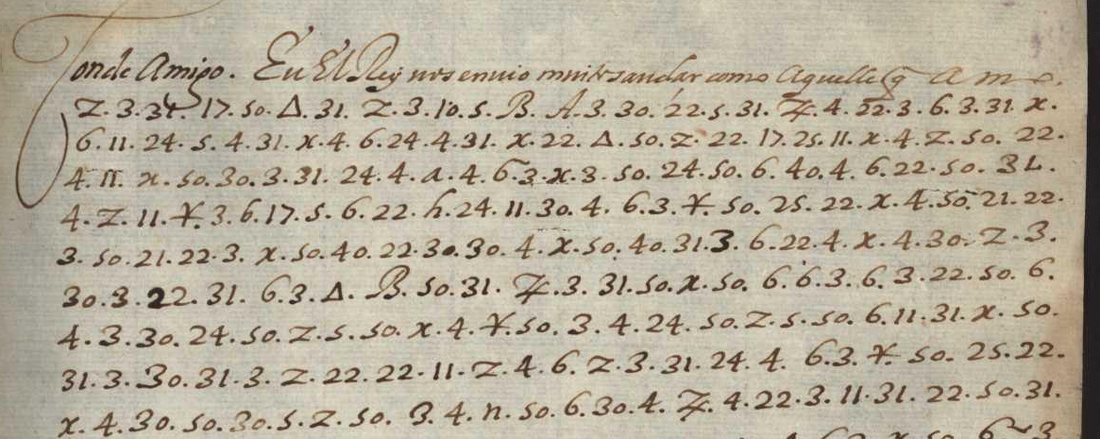
A substitution of single letters, on Portuguese, with no code words. The symbols are numbers and letter-like shapes written with points between them. Several are ordinary cursive letters standing for other letters, which makes a run look like garbled Portuguese: x is c, h is l, n is f, r is g, a is p, d is x. The repository transcribes the special shapes by the letter they resemble: Z for a barred z (Ƶ), D for a delta (Δ), B for a long-stemmed B (ß), F for a barred 7 (ꝼ), K for an overlined x (Ӿ).
Key K1, as recovered from the 26 May letter (30 distinct symbols there):
| plain | symbols | plain | symbols | plain | symbols |
|---|---|---|---|---|---|
| a | 4 | h | F, 10 | p | 17, a |
| b | 7 | i | 11, D | q | 21 |
| c | x | l | h, 25 | r | 6 |
| d | Z | m | 30 | s | 31 |
| e | 3 | n | 40, B | t | 24, A |
| f | n | o | 50, 5 | u / v | 22 |
| g | r, 8 | x | d, 27 | ||
| z | K |
The other letters use a few more homophones, set on the 13 May letter itself (K2): 9 = c, a looped 9 (g) = e, e = q, 2 = f, p = a, Q = u/v, S = b, 53 = d, u = m, & = e. The long letter of 15 May was deciphered with K3; the K2 and K3 files in the repository list the same forty values. No key has a symbol for j, k or y, or for the cedilla and the tilde, and u and v are not distinguished. Numbers of two or more figures are written in clear inside the cipher (203 cavallos, 56, 55), and so are some dates, which is a trap: in the 13 May letter 10 and 9 are days of the month, although 10 and 9 are also the symbols for h and c.
03 How the key was recovered
One letter, no crib. The 26 May letter carries no decipherment, and no key survives in the volume. Brice Dudout transcribed it symbol by symbol (634 positions, one of them lost in a tear of the right margin) and recovered K1 from it alone, with Portuguese letter statistics and the words such a letter must contain: que, exercito, cartas, risco. The key was then frozen, its SHA-256 fingerprint recorded, before any test.
A test fixed in advance. The 13 May letter, transcribed without the key (636 symbols), was decoded with the frozen K1 and scored with a Portuguese language model: −2.61 per character. The same letter with its symbols shuffled scored at best −4.52, and keys with permuted values at best −5.52 in 200 trials, while a Portuguese text enciphered with K1 with 3% of simulated errors scores −2.58. K1 covers 92.8% of the 13 May symbols; the extra homophones of K2 were then set on that letter.
The other copies. The second copy of 26 May (image 39) and the second copy of the 15 May note (image 71) are enciphered with other homophones and other line breaks; each gives the same text, and between them they settle every doubtful symbol of the first copies. The frozen K1 decodes the note at −2.25 per character, against at best −4.72 for the controls. Of the long 15 May letter both copies were deciphered with K3: they agree with the established text at 98.7% and 99.0%, and with each other at 0.927, against at best 0.131 when one copy’s symbols are shuffled (20 trials).
A sentence in clear. Copy 1 of the long letter writes one sentence in clear that copy 2 enciphers (image 57, lines 20–26). The key gives 164 of its 166 characters; the two differences are spelling (quasi and quazi, thenente and tenente):
K3 on copy 2: a defensa e quazi no mesmo tempo tinha enviado o tenente de mestre de campo general luis ribeiro para que tomando as noticias convenientes encaminhe dali as carruagens e outros socorros pela parte mais segura
copy 1, clear:    E quasi no mesmo tempo tinha enviado o thenente de m[estr]e de campo g[ene]r[a]l Luis R[ibeir]o, para q[ue] tomando as noticias convenientes encaminhe dali as carruagens, e outros socorros p[e]la parte mais segura.
In the cipher the slip is the encipherer’s: quazi is written with F (h) where K (z) was meant.
04 The statistical check
The project’s statistical check (docs/_validate.py) was run on the two letters deciphered with K2, 13 May and the 15 May note: 1,139 symbols of 37 kinds, scored with a Portuguese letter model. The reading scores −2.36 per letter. Random keys score −7.41 on average, 6.8 standard deviations lower, and a key fitted by the annealer to the same symbols in shuffled order reaches at best −3.64. The annealer run on the real text from random starting keys reaches −2.50, close to the reading, so the search does find this key. The verdict is pass: with about thirty occurrences per symbol, the letter statistics separate this key from any key fitted to noise.
05 The four letters
Clear text roman, cipher in italic; spelling of the cipher kept; word division, punctuation, capitals, u/v, i/j, cedillas and tildes editorial, since the cipher has no symbols for them; [x] an expanded abbreviation or restored letter; {x} an encipherer’s slip corrected; ‹x› unresolved
13 May 1663: the cavalry on its way
Conde amigo. Eu ElRey vos envio muito saudar como aquelle q[ue] amo.
A ultima carta que se recebeo vosa foi de {10} do corrente, e fico com cuidado de se nam hav{e}r recebido outra, e se entende pod[e]ria t{o}mar-se o correo. Despacho {es}te para vos avizar que Manoe[l] Freire de Andrade partio d{e} Coimbra em 9 deste á tarde com 203 cavallos, e escreve q[ue] nam faria outra detença mais q[u]e em montar alguns que hião desmontados; com elle deve hir tambem tudo o que faltava do socorro da Be{i}ra; conforme a isto pod{e}reis fazer conta de quando ahi poderá {c}hegar. Das companhias de cav[a]los desta cidade pasa amanhã a de Luis Lo[bo] ‹aal› de Agalega com 56 cavalos; no dia seguinte parte a do comisario Gonçalo da Costa, e no outro Diogo Luis Ribeiro e Jorge Furtado, e cada hum leva 55 cavalos pelo menos. Nam se oferece outra couza de q[ue] vos avizar mais que estar-se esperando {c}oreio com todo o cuidado.
Escrita em L[isbo]a a 13 de Mayo de 1663. Rey.
Written the day before Évora was invested. The last letter from Vila Flor received at court was of the 10th, and the court fears the courier has been taken. Manuel Freire de Andrade left Coimbra on the 9th with 203 horse and the rest of the Beira relief; of the Lisbon cavalry companies, one leaves tomorrow with 56 horse, then those of Gonçalo da Costa, Diogo Luís Ribeiro and Jorge Furtado, at least 55 horse each.
15 May 1663: the long letter
Partly in clear and partly in cipher. The cipher carries everything the enemy should not learn: the Beira reinforcements reported by Pedro Jaques de Magalhães (1,801 foot in the terços of Manuel Ferreira Rebelo and Paulo de Andrade, 408 horse), Manuel Freire de Andrade’s 203 horse, three Lisbon cavalry companies embarking with 170 horse and Jorge Furtado following with 60; the King’s plan to make Setúbal a place of arms and to come himself to Setúbal or Palmela; 44,000 cruzados for the pay that left on Thursday and have taken shelter somewhere still unknown, with boots and other stores, money for the French and a thousand cruzados for the English, “e que tudo se tem entendido estar em Evora”; and the mestre de campo António Soares da Costa and an engineer sent to Montemor. In clear are the greeting, the doctrine that an army raised and paid by the kingdom exists to fight when it must, and the order to send a courier every day, “ainda que não haja couza de novo”.
15 May 1663: “a todo o risco”
Conde amigo. Eu ElRey vos envio muito saudar como aquelle que amo.
Demais do que vos digo em outra carta desta mesma data, tornando-sse a considerar a materia principal de que nella se trata, fui servido rezolver que, em cazo que o inimigo persevere no sitio de Evora e reduza aquela cidade a termos perigozos, ajunteis todas as forças dessa provincia, e com os socorros que das outras espera{i}s a procureis socorrer a todo o risco, ainda que vos exponhais a[o] ultimo transe de huma batalha, porque assim convem á defença do reino e a meu serviço, pella importancia da praça e conse[q]uencias que se seguirão d{o} sucesso que ella tiver; o que espero executareis com a rezoluçam e valor q{ue} he necessaria.
Escrita em L[isbo]a a 15 de Mayo de 1663. Rey.
A note added to the long letter the day after Évora was invested, wholly in cipher between the greeting and the date. The main question has been considered again: if the enemy keeps up the siege and puts the city in danger, Vila Flor is to gather all the forces of the province and the help expected from the others, and relieve it at all risk, “even exposing yourself to the last extremity of a battle”, for the defence of the kingdom requires it.
26 May 1663: the final resolution
Conde Amigo. Eu ElRey vos envio muito saudar como aquelle q[ue] amo.
Despois de hontem vos haver escrito as cartas cujo duplicado vai com esta, pareceo tornar-vos a dizer por ultima rezolução que o que convem a conservaçam de meus reinos he socorrer Evora em todo o cazo e a todo o risco, sem se duvidar desta rezoluçam; o modo e a forma haveis vós de dispor como vos parec{e}r. Esta minha carta mostrareis aos cabos desse exercito, de cujo valor e rezolução espero que todo este reino lhes deva sua conservação. Tambem me pareceo dizer-vos que logo, sem tardança, deveis logo mover esse exercito, tanto para animar essa gente como para entender o inimigo que he esta a minha rezoluçam; e dentro de dous dias partirá daqui dinheiro consideravel, que baste para paga do exercito e das carruagens; o q[u]e podeis fazer notorio a todos, [p]ara que o tenham entendido.
Escrita em Lixb[o]a a 26 de Mayo de 1663. Rey.
Written four days after Évora surrendered. The King tells Vila Flor again, “as my final resolution”, that the preservation of his kingdoms requires the relief of Évora in any event and at all risk; the manner is left to him. He is to show the letter to his commanders, move the army at once, both to hearten the men and to show the enemy the King’s resolve, and announce that within two days a considerable sum will leave Lisbon for the pay of the army and the wagons.
06 The siege of Évora
Don John appeared before Estremoz, the army’s base, on 11 May 1663; unable to attack it, he marched on Évora and invested it on the 14th. The 13 May letter was written while Lisbon did not yet know his target. Vila Flor’s council of war resolved to march to the city’s relief, and the army left Estremoz on 22 May, the day Évora surrendered (Ericeira, book VIII). The order was renewed on 26 May. On 8 June Vila Flor and Schomberg defeated Don John at Ameixial, and Évora was retaken in June.
The letters fill in what Ericeira’s Historia de Portugal Restaurado only alludes to, “the King’s repeated orders and the urgent pressure of the Count of Castelo Melhor”. Several details agree with his narrative: the Beira terços of Manuel Ferreira Rebelo and Paulo de Andrade were with the army on 22 May, Manuel Freire de Andrade joined it with the Beira horse, and Ericeira counts eighty thousand cruzados sent from Lisbon among the funds of the Évora garrison when the siege began, which fits the 15 May letter’s belief that the pay convoy had taken shelter in the city. The plan to bring the King to Setúbal or Palmela was kept in cipher, and the contributor found no trace of the journey in Ericeira.
07 What remains uncertain
- 13 May, ʒ: a symbol used once, in Despacho {es}te, taken as es from the sense (grade I); it is the one position in the four letters without a value from the key.
- 13 May, Lo[bo] ‹aal› de Agalega: after Lo the encipherer struck out two symbols, probably bo (Luís Lobo is named in the long letter of 15 May); aal de Agalega is not explained.
- 13 May, slips: about fifteen symbols corrected from the sense (grade M): three times 30 (m) for 3 (e), in hav{e}r, d{e} Coimbra and pod{e}reis; twice K (z) for c, in {c}hegar and {c}oreio; A (t) for i in Be{i}ra; letters left out. This letter survives in one copy, so the corrections rest on the sense alone.
- 15 May note: five slips of the first copy (espera{i}s, a[o], conse[q]uencias, d{o}, q{ue}), all settled by the second copy.
- 26 May: one symbol lost in the tear, restored from the sense as [p] in [p]ara; parecor written for parecer.
- 15 May, long letter: agardeço for agradeço in both copies, so the draft’s spelling; the engineer sent to Montemor, Adam Fr[ancis]co de Pontes in both copies, is not identified. Only the 174-symbol passage shown in section 03 is transcribed in the repository; the full transcriptions of the two copies (2,213 and 2,357 symbols, as the contributor counts them) and their decryptions are not, so the long letter’s text cannot yet be checked symbol by symbol here.
- The K2 homophones were set on the 13 May letter itself and are not tested independently of it; the test in section 03 is of K1.
- Prior work. Ericeira’s Historia de Portugal Restaurado, part II (1698), book VIII, and its 1751 edition do not quote the letters. The blog Guerra da Restauração, which publishes documents of the 1663 campaign, gives Vila Flor’s letter of 26 May, not the King’s. António Álvares da Cunha’s Campanha de Portugal pella provincia do Alentejo na primavera do anno de 1663 (Lisbon, 1663) is not digitised as far as the contributor found and has not been checked. Web searches in Portuguese and English found no edition (27 October 2026).
Full texts
The transcription and the decryption of every document on this page, so that the reading can be used and checked. Short files are shown here; all are in the repository.
Afonso VI to the Count of Vila Flor, 13 May 1663: the cavalry sent as reinforcements
Written two days after Don John appeared before Estremoz and the day before Évora was invested, the letter first worries about the general’s silence: the courier may have been taken. Then it announces, company by company, the cavalry leaving for the Alentejo.
Transcription
# 13 May 1663: the cavalry sent as reinforcements; ANTT, Luís de Miranda Pereira, liv. 2 (PT/TT/LMP/0002), image 87 of the DigitArq digitisation
# one line per manuscript line; ? = doubtful reading of the sign
4 22 25 24 D u p 9 4 6 A p e Q g 31 3 6 g x 3 S g 50 22
50 31 4 n 50 D Z g 10 Z 5 x 50 6 6 g B A g 3 n 11 x 50
x 50 30 9 22 11 Z 4 53 50 Z g 31 3 B 4 30 10 4 22 30 6 6 3
x 3 7 11 Z 50 5 22 24 6 4 3 31 3 g B 24 3 B Z 3 a 5 Z
6 11 4 A g 30 4 6 31 3 5 x 50 6 6 3 50 Z 3 31 17 4 x 10 50
y A 3 17 4 6 4 22 50 31 4 22 11 K 4 6 21 22 3 30 4 B 50 3
2 6 3 11 6 3 Z 3 4 B Z 6 4 Z 3 17 4 6 24 11 50 Z 30 x 50 11
30 S 6 4 3 30 g Z 3 31 A 3 4 24 4 6 Z 3 x 50 30 203? x p
Q 4 25 h 50 31 3 g 31 x 6 3 Q g e B 4 30 n 4 6 11 4 50
22 A 6 4 Z 3 A 3 B x 4 30 p 11 31 21 3 30 u 50 B A 4 6 4
h r Q B 31 e 22 3 F 11 4 5 Z 3 31 30 50 40 24 4 Z 50 31
x 50 30 3 h 25 3 Z 3 22 3 10 D 6 A 4 30 7 3 30 24 22 Z 50
50 21 22 3 2 4 25 A 4 Q 4 Z 50 31 5 x 50 6 6 5 Z 4 S 3 A
6 4 x 5 B n 50 6 30 3 4 D 31 24 50 17 50 Z 30 6 3 11 31 2 4
F 3 6 x 50 B A 4 Z 3 e 22 4 B Z 50 4 F 11 a 50 Z 3 6 4
K F 3 r 4 6 Z 4 31 4 x 50 30 a 4 B F 11 4 31 Z 3 x 4 22
25 50 31 Z 3 31 24 4 x 11 Z 4 Z 3 17 4 31 4 p 30 4 40 10 4
4 Z 3 h 22 11 31 25 50 4 p 25 Z 3 4 r 4 h 3 r 4 x
50 30 56 x 4 22 p h 50 31 40 50 Z 11 4 31 3 r 22 11 40 A 3
17 4 6 A 3 4 Z 50 x 50 30 11 31 4 6 11 50 r 50 40 x 4 25 5 Z
4 x 50 31 A 4 3 40 50 5 22 24 6 50 Z 11 5 r 50 h 22 11 31 6
11 7 3 D 6 5 3 11 5 6 r 3 n 22 6 A 4 Z 50 3 x 4 Z 4 F 22 30
h 3 22 4 55 x 4 22 4 h 5 31 a 3 h 5 30 3 40 5 31 40 4 30
31 3 50 n 3 6 g x 3 5 22 24 6 4 x 50 22 K 4 Z 3 e 22 50 31
4 22 11 K 4 6 30 4 11 31 e 22 3 g 31 24 4 6 31 3 3 31 a 3 6 4
40 Z 50 K 5 6 3 11 5 x 5 30 A 50 Z 5 50 x 22 D Z 4 Z 50
Decryption
# 13 May 1663: the cavalry sent as reinforcements: token=value with key K2 (key_K2.tsv); ‹x› unresolved
L01	4=a 22=u 25=l 24=t D=i u=m p=a 9=c 4=a 6=r A=t p=a e=q Q=v g=e 31=s 3=e 6=r g=e x=c 3=e S=b g=e 50=o 22=u
L02	50=o 31=s 4=a n=f 50=o D=i Z=d g=[10] 10=h Z=d 5=o x=c 50=o 6=r 6=r g=e B=n A=t g=e 3=e n=f 11=i x=c 50=o
L03	x=c 50=o 30=m 9=c 22=u 11=i Z=d 4=a 53=d 50=o Z=d g=e 31=s 3=e B=n 4=a 30=m 10=h 4=a 22=u 30=m 6=r 6=r 3=e
L04	x=c 3=e 7=b 11=i Z=d 50=o 5=o 22=u 24=t 6=r 4=a 3=e 31=s 3=e g=e B=n 24=t 3=e B=n Z=d 3=e a=p 5=o Z=d
L05	6=r 11=i 4=a A=t g=e 30=m 4=a 6=r 31=s 3=e 5=o x=c 50=o 6=r 6=r 3=e 50=o Z=d 3=e 31=s 17=p 4=a x=c 10=h 50=o
L06	y=‹ʒ› A=t 3=e 17=p 4=a 6=r 4=a 22=u 50=o 31=s 4=a 22=u 11=i K=z 4=a 6=r 21=q 22=u 3=e 30=m 4=a B=n 50=o 3=e
L07	2=f 6=r 3=e 11=i 6=r 3=e Z=d 3=e 4=a B=n Z=d 6=r 4=a Z=d 3=e 17=p 4=a 6=r 24=t 11=i 50=o Z=d 30=m x=c 50=o 11=i
L08	30=m S=b 6=r 4=a 3=e 30=[9] g=e Z=d 3=e 31=s A=t 3=e 4=a 24=t 4=a 6=r Z=d 3=e x=c 50=o 30=m 203?=[203] x=c p=a
L09	Q=v 4=a 25=l h=l 50=o 31=s 3=e g=e 31=s x=c 6=r 3=e Q=v g=e e=q B=n 4=a 30=m n=f 4=a 6=r 11=i 4=a 50=o
L10	22=u A=t 6=r 4=a Z=d 3=e A=t 3=e B=n x=c 4=a 30=m p=a 11=i 31=s 21=q 3=e 30=m u=m 50=o B=n A=t 4=a 6=r 4=a
L11	h=l r=g Q=v B=n 31=s e=q 22=u 3=e F=h 11=i 4=a 5=o Z=d 3=e 31=s 30=m 50=o 40=n 24=t 4=a Z=d 50=o 31=s
L12	x=c 50=o 30=m 3=e h=l 25=l 3=e Z=d 3=e 22=u 3=e 10=h D=i 6=r A=t 4=a 30=m 7=b 3=e 30=m 24=t 22=u Z=d 50=o
L13	50=o 21=q 22=u 3=e 2=f 4=a 25=l A=t 4=a Q=v 4=a Z=d 50=o 31=s 5=o x=c 50=o 6=r 6=r 5=o Z=d 4=a S=b 3=e A=t
L14	6=r 4=a x=c 5=o B=n n=f 50=o 6=r 30=m 3=e 4=a D=i 31=s 24=t 50=o 17=p 50=o Z=d 30=m 6=r 3=e 11=i 31=s 2=f 4=a
L15	F=h 3=e 6=r x=c 50=o B=n A=t 4=a Z=d 3=e e=q 22=u 4=a B=n Z=d 50=o 4=a F=h 11=i a=p 50=o Z=d 3=e 6=r 4=a
L16	K=z F=h 3=e r=g 4=a 6=r Z=d 4=a 31=s 4=a x=c 50=o 30=m a=p 4=a B=n F=h 11=i 4=a 31=s Z=d 3=e x=c 4=a 22=u
L17	25=l 50=o 31=s Z=d 3=e 31=s 24=t 4=a x=c 11=i Z=d 4=a Z=d 3=e 17=p 4=a 31=s 4=a p=a 30=m 4=a 40=n 10=h 4=a
L18	4=a Z=d 3=e h=l 22=u 11=i 31=s 25=l 50=o 4=a p=a 25=l Z=d 3=e 4=a r=g 4=a h=l 3=e r=g 4=a x=c
L19	50=o 30=m 56=[56] x=c 4=a 22=u p=a h=l 50=o 31=s 40=n 50=o Z=d 11=i 4=a 31=s 3=e r=g 22=u 11=i 40=n A=t 3=e
L20	17=p 4=a 6=r A=t 3=e 4=a Z=d 50=o x=c 50=o 30=m 11=i 31=s 4=a 6=r 11=i 50=o r=g 50=o 40=n x=c 4=a 25=l 5=o Z=d
L21	4=a x=c 50=o 31=s A=t 4=a 3=e 40=n 50=o 5=o 22=u 24=t 6=r 50=o Z=d 11=i 5=o r=g 50=o h=l 22=u 11=i 31=s 6=r
L22	11=i 7=b 3=e D=i 6=r 5=o 3=e 11=i 5=o 6=r r=g 3=e n=f 22=u 6=r A=t 4=a Z=d 50=o 3=e x=c 4=a Z=d 4=a F=h 22=u 30=m
L23	h=l 3=e 22=u 4=a 55=[55] x=c 4=a 22=u 4=a h=l 5=o 31=s a=p 3=e h=l 5=o 30=m 3=e 40=n 5=o 31=s 40=n 4=a 30=m
L24	31=s 3=e 50=o n=f 3=e 6=r g=e x=c 3=e 5=o 22=u 24=t 6=r 4=a x=c 50=o 22=u K=z 4=a Z=d 3=e e=q 22=u 50=o 31=s
L25	4=a 22=u 11=i K=z 4=a 6=r 30=m 4=a 11=i 31=s e=q 22=u 3=e g=e 31=s 24=t 4=a 6=r 31=s 3=e 3=e 31=s a=p 3=e 6=r 4=a
L26	40=n Z=d 50=o K=z 5=o 6=r 3=e 11=i 5=o x=c 5=o 30=m A=t 50=o Z=d 5=o 50=o x=c 22=u D=i Z=d 4=a Z=d 50=o
Reading
# 13 May 1663: the cavalry sent as reinforcements: established text (Portuguese)

Conventions: {x} probable; ‹x› clerk's slip or unresolved; [..] editorial.

Conde amigo. Eu ElRey vos envio muito saudar como aquelle q[ue] amo.

A ultima carta que se recebeo vosa foi de {10} do corrente, e fico com cuidado de se nam hav{e}r recebido outra, e se entende pod[e]ria t{o}mar-se o correo. Despacho {es}te para vos avizar que Manoe[l] Freire de Andrade partio d{e} Coimbra em 9 deste á tarde com 203 cavallos, e escreve q[ue] nam faria outra detença mais q[u]e em montar alguns que hião desmontados; com elle deve hir tambem tudo o que faltava do socorro da Be{i}ra; conforme a isto pod{e}reis fazer conta de quando ahi poderá {c}hegar. Das companhias de cav[a]los desta cidade pasa amanhã a de Luis Lo[bo] ‹aal› de Agalega com 56 cavalos; no dia seguinte parte a do comisario Gonçalo da Costa, e no outro Diogo Luis Ribeiro e Jorge Furtado, e cada hum leva 55 cavalos pelo menos. Nam se oferece outra couza de q[ue] vos avizar mais que estar-se esperando {c}oreio com todo o cuidado.

Escrita em L[isbo]a a 13 de Mayo de 1663. — Rey. — [Conde de Castelo Melhor]. — [Adresse :] P[ar]a o Conde de V[ila] Flor.
Translation
# 13 May 1663: the cavalry sent as reinforcements: English translation

Count, my friend. I the King send you warm greetings, as one whom I love.

The last letter of yours received here was of the 10th of this month, and I am anxious at not having received another; it is thought the courier may have been taken. I send this one to let you know that Manuel Freire de Andrade left Coimbra on the 9th of this month, in the afternoon, with 203 horse, and writes that he will make no other halt than to mount some men who were going on foot; with him should also go everything that was lacking from the Beira relief; from this you can reckon when he may arrive there.

Of the cavalry companies of this city, that of Luís Lobo (?) […] de Agalega leaves tomorrow with 56 horse; the next day that of commissary Gonçalo da Costa leaves, and the day after Diogo Luís Ribeiro and Jorge Furtado, each taking at least 55 horse. Nothing else occurs to tell you, except that the courier is awaited with the greatest anxiety.

Written in Lisbon on 13 May 1663. The King. — The Count of Castelo Melhor. — To the Count of Vila Flor.
Afonso VI to the Count of Vila Flor, 15 May 1663, the other letter: reinforcements, money, and the King at Setúbal
This is the “other letter of this same date” to which the ciphered note of 15 May refers. Partly in clear and partly in cipher, it keeps for the cipher everything that would inform the enemy: the reinforcements on the way (Beira foot and horse, Lisbon companies), the King’s plan to set up a place of arms at Setúbal or Palmela, the pay money, the help sent to Montemor. Left in clear are the greeting, the doctrine (“an army is there to fight”) and the request for a courier every day.
Transcription
# 15 May 1663, the other letter: reinforcements, money, and the King at Setúbal; ANTT, Luís de Miranda Pereira, liv. 2 (PT/TT/LMP/0002), two ciphered copies: images 53, 54 and 59 (copy 1); images 55, 56 and 57 (copy 2)
# one line per manuscript line; ? = doubtful reading of the sign
4 Z 3 n 3 B 31 4 3 21 22 4 F 11 40 5 30 3 31 30 5 24 3 30 17 5 24 11
40 F 4 3 40 22 D 4 Z 50 5 24 3 40 3 B 24 3 Z 3 30 3 31 24 6 3
Z 3 x 4 30 17 50 r 3 B 3 6 4 h h 22 11 31 6 11 7 3 11 6 50 17 4 6 4
21 22 3 24 50 30 4 40 Z 50 4 31 40 50 24 11 x D 4 31 x 50 40 22 3 40
11 3 40 24 3 31 3 B x 4 30 11 40 F 3 Z 4 h 11 4 31 x 4 6 6 22 4 r
3 40 31 3 50 22 24 6 50 31 31 50 x 5 6 6 5 31 17 3 h 4 17 4 6 24 3 30
4 11 31 31 3 r 22 6 4
Decryption
# 15 May 1663, the other letter: reinforcements, money, and the King at Setúbal: token=value with key K3 (key_K3.tsv); ‹x› unresolved
L01	4=a Z=d 3=e n=f 3=e B=n 31=s 4=a 3=e 21=q 22=u 4=z F=h 11=i 40=n 5=o 30=m 3=e 31=s 30=m 5=o 24=t 3=e 30=m 17=p 5=o 24=t 11=i
L02	40=n F=h 4=a 3=e 40=n 22=u D=i 4=a Z=d 50=o 5=o 24=t 3=e 40=n 3=e B=n 24=t 3=e Z=d 3=e 30=m 3=e 31=s 24=t 6=r 3=e
L03	Z=d 3=e x=c 4=a 30=m 17=p 50=o r=g 3=e B=n 3=e 6=r 4=a h=l h=l 22=u 11=i 31=s 6=r 11=i 7=b 3=e 11=i 6=r 50=o 17=p 4=a 6=r 4=a
L04	21=q 22=u 3=e 24=t 50=o 30=m 4=a 40=n Z=d 50=o 4=a 31=s 40=n 50=o 24=t 11=i x=c D=i 4=a 31=s x=c 50=o 40=n 22=u 3=e 40=n
L05	11=i 3=e 40=n 24=t 3=e 31=s 3=e B=n x=c 4=a 30=m 11=i 40=n F=h 3=e Z=d 4=a h=l 11=i 4=a 31=s x=c 4=a 6=r 6=r 22=u 4=a r=g
L06	3=e 40=n 31=s 3=e 50=o 22=u 24=t 6=r 50=o 31=s 31=s 50=o x=c 5=o 6=r 6=r 5=o 31=s 17=p 3=e h=l 4=a 17=p 4=a 6=r 24=t 3=e 30=m
L07	4=a 11=i 31=s 31=s 3=e r=g 22=u 6=r 4=a
Reading
# 15 May 1663, the other letter: reinforcements, money, and the King at Setúbal: established text (Portuguese)

Conventions: {x} probable; ‹x› clerk's slip or unresolved; [..] editorial.

Conde Amigo. Eu ElRey vos envio muito saudar como aquelle q[ue] amo. Receberão-se as vossas cartas de 12 do corrente em q[ue] daes conta do que té aquelle tempo havia succedido, e tinheis alcançado do Inimigo, que me dera muito mayor cuidado, se vos não tivera no governo de minhas armas, e aos cabos que comvosco assistem, cujo valor vejo se communica a todos os soldados desse exercito, e ainda aos moradores de todos os lugares, conforme a informação q[ue] tenho, de como estão animados, o q[ue] me dá grande contentamento.

Entendo que ja la tendes os terços auxiliares da Estremadura, excepto algumas companhias do de Torres Vedras que hão partido mais tarde; o do termo desta cidade se fica aprestando com toda a deligencia, e posto que não poderá chegar para a primeira ocazião que espero tenha, servirão para despois reforçar o exercito. Hoje se recebeo o avizo do mestre de campo general Pedro Jaques de Magalhães com data de 9 do corrente, com huma relação da infanteria e cavallaria que dis tinha partido té o primeiro de Mayo, que contem 1801 praças de infanteria nos dous terços do mestre de campo Manoel Ferreira Rebelo e Paulo de Andrade, e 408 praças de cavallaria, que conforme ao tempo em que refere partio devem de ser chegadas; e diz que esperava fosse de Almeida Manoel Freire de Andrade para levar tudo o mais que houvesse, o qual partio de Coimbra com 203 cavalos, que ali comprou em 9 do corrente, e parece chegará ahi muito brevemente. Desta cidade se embarcarão hoje as companhias de cavalos dos comissarios Gonçalo da Costa de Menezes, Luis Lobo e Diogo Luis Ribeiro com 170 cavalos bem montados, e amanhã parte Jorge Furtado com a sua, que constará de 60 cavalos, e vai com ordem de em Montemor tomarem as noticias necessarias para o caminho que hão de seguir. Tanto que vos chegarem estes socorros, se entende que vos achareis com poder bastante para pelejardes com o inimigo, se vos parecer, o que fica á vossa dispozição.

O que daqui se vos pode dizer he, que assim para que {se a}junta exercito, e o Reino o sustenta com suas contribuições, he para o defenderem, pelejando quando he necessario, e do contrario se perderia a reputação das armas, e se desconsolarião os vassallos, e se seguirião outras consequencias muito perjudiciaes. Presentes vos são estas razões, e conheço de vós que as medireis com o tempo e ocazião que vos offerecer, para acertardes no que mais convenha.

Para engrossar ao diante e conservar esse exercito, pareceo o meio mais eficaz passar eu a essa provincia; e assim ordeno se faça praça de armas na villa de Setuval, por se julgar parte mais acomodada por muitas razões, e ali mando juntar o que for possivel com toda a brevidade, e com a mesma passarei eu logo a assistir naquella villa ou na de Palmela, para socorrer como e aonde o tempo mostrar que he necessario; e no interim e sempre se vos hirá acudindo com a maior pontualidade que puder ser, particularmente com dinheiro para paga dos soldados: quarenta e quatro mil cruzados tinham partido daqui quinta feira, e se entende estão recolhidos em parte segura, mas ainda se não sabe ao certo aonde, e com elles huma partida de botas e outras couzas. Tambem mandei remeter dinheiro para os Francezes, e mil cruzados que faltarão para os Inglezes. E que tudo se tem entendido estar em Evora. Aquella cidade tenho por bastantemente prevenida, conforme o tempo deu lugar, e vos agardeço a deligencia com que o fizestes; espero em Deos que se defenderá té que chegueis a socorrê-la; e sendo ella da importancia e reputação que sabeis, não tenho para que vo-la encomendar. A Montemor me pareceo enviar o mestre de campo Antonio Soares da Costa e o engenheiro Adam Fr[ancis]co de Pontes para assistir ao que for necessario para sua defensa; e quazi no mesmo tempo tinha enviado o tenente de mestre de campo general Luis Ribeiro, para que tomando as noticias convenientes encaminhe dali as carruagens e outros socorros pela parte mais segura. Ao correio mor se ordenou mudasse as postas como apontais e as dobrasse.

Encomendovos muito, que todos os dias infalivelmente me despacheis hum correyo pelo menos, com aviso do que for succedendo, ainda que não haja couza de novo, para me tirar do cuidado em que he força esteja do que passa dessa banda. Escrita em L[isbo]a a 15 de Mayo de 1663. — Rey. — [Conde de Castelo Melhor]. — P[ar]a o Conde de Villa Flor.
Translation
# 15 May 1663, the other letter: reinforcements, money, and the King at Setúbal: English translation

Count, my friend. I the King send you warm greetings, as one whom I love. Your letters of the 12th of this month have been received, in which you report what had happened up to that time and what you had learnt of the enemy; this would have caused me much greater anxiety had I not you at the head of my arms, and with you the commanders who assist you, whose valour I see passes to all the soldiers of that army and even to the inhabitants of every place, according to what I am told of their spirit; which gives me great satisfaction.

I understand that you already have there the auxiliary terços of Estremadura, except some companies of the Torres Vedras one which left later; that of the district of this city [Lisbon] is being made ready with all diligence, and although it cannot arrive for the first occasion I hope you will have, it will serve afterwards to reinforce the army. Today the report of the mestre de campo general Pedro Jaques de Magalhães was received, dated the 9th of this month, with a return of the infantry and cavalry which, he says, had left by the 1st of May: 1,801 foot in the two terços of the mestres de campo Manuel Ferreira Rebelo and Paulo de Andrade, and 408 horse, which, given the time of their departure, must have arrived; he says he was waiting for Manuel Freire de Andrade to come from Almeida to bring all the rest; he left Coimbra with 203 horses, which he bought there on the 9th of this month, and should reach you very soon. From this city the cavalry companies of the commissaries Gonçalo da Costa de Meneses, Luís Lobo and Diogo Luís Ribeiro embark today with 170 well-mounted horse, and tomorrow Jorge Furtado leaves with his, which will be of 60 horse; they are ordered to take at Montemor the news they need for the road they are to follow. As soon as these reinforcements reach you, it is thought you will have strength enough to fight the enemy, if you see fit: that is left to your discretion.

What can be told you from here is that, if an army is raised and the Kingdom maintains it with its contributions, it is so that it may defend it, fighting when it is necessary; otherwise the reputation of our arms would be lost, the vassals would be disheartened, and other very harmful consequences would follow. These reasons are present to you, and I know you well enough to know that you will weigh them against the time and the occasion that offer, so as to do what is best.

To enlarge this army in future and maintain it, the most effective means seemed to be that I should go myself to that province; I therefore order that a place of arms be made in the town of Setúbal, judged the most suitable spot for many reasons, and I am having everything possible gathered there with all speed; with the same speed I shall go at once to reside in that town or in Palmela, to give help as and where time shows it is needed. In the meantime, and always, you will be supplied with the greatest punctuality possible, particularly with money for the soldiers’ pay: forty-four thousand cruzados left here on Thursday [10 May], and they are thought to be sheltered in a safe place, but it is not yet known exactly where; with them a consignment of boots and other things. I have also had money sent for the French, and a thousand cruzados that were lacking for the English. And it has been learnt that all of it is in Évora. That city I consider sufficiently provided, as far as time allowed, and I thank you for the diligence with which you did it; I hope in God that it will hold out until you come to relieve it; and as it is of the importance and reputation you know, I need not commend it to you. To Montemor I thought fit to send the mestre de campo António Soares da Costa and the engineer Adam Fr[ancis]co de Pontes, to help with whatever is needed for its defence; and almost at the same time the tenente de mestre de campo general Luís Ribeiro had been sent, so that, taking the appropriate news, he might forward from there the wagons and other supplies by the safest way. The correio-mor has been ordered to change the post relays as you suggest, and to double them.

I strongly charge you to send me without fail every day at least one courier, with word of what is happening, even if there is nothing new, to free me from the anxiety in which I must needs be about what is going on on that side. Written in Lisbon on 15 May 1663. The King. — The Count of Castelo Melhor. — To the Count of Vila Flor.
Afonso VI to the Count of Vila Flor, 15 May 1663: “at the risk of a battle”
The day after Évora was invested, the King added to a long letter of the same date a note entirely in cipher apart from the greeting and the date. The main question had been “reconsidered”: if the enemy persisted and put the city in danger, Vila Flor was to gather all his forces and relieve it at all risk, “even exposing yourself to the last extremity of a battle”.
Transcription
# 15 May 1663: “at the risk of a battle”; ANTT, Luís de Miranda Pereira, liv. 2 (PT/TT/LMP/0002), image 69 of the DigitArq digitisation; second ciphered copy image 71
# one line per manuscript line; ? = doubtful reading of the sign
Z 3 30 4 11 31 Z 50 21 22 3 22 50 31 Z 11 r 50 3 30 50 22 24 6 4
x 4 6 24 4 Z 3 31 24 4 30 3 31 30 4 Z 4 24 4 24 50 6 40 4 B Z 50
31 31 3 4 x 50 40 31 11 Z 3 6 4 6 4 30 4 24 3 6 11 4 17 6 D 40 x 11
17 4 h Z 3 21 22 3 40 3 h h 4 31 3 24 6 4 24 4 n 22 11 31 3 6 22
11 Z 50 6 3 K 50 h 22 3 6 21 22 3 3 30 x 4 K 50 21 22 3 5 11 40 D
30 11 r 50 17 3 6 31 3 22 3 6 3 40 5 31 11 24 11 50 Z 3 3 22 50 6 4
3 6 3 Z 22 K 4 4 21 22 3 h 4 x 11 Z 4 Z 3 4 24 3 6 30 50 31
17 3 6 11 r 50 K 5 31 4 11 22 40 24 3 11 31 24 5 Z 4 31 4 31 n 50
6 x 4 31 Z 3 31 31 4 17 6 5 22 D 40 x 11 4 3 x 50 30 5 31 31 50
x 50 6 6 5 31 21 22 3 Z 4 31 50 22 24 6 4 31 3 31 17 3 6 4 n? 31
4 17 6 5 x 22 6 3 11 31 31 50 x 5 6 6 3 6 4 24 5 Z 50 5 6 11 31 x
50 4 11 40 Z 4 21 22 3 22 50 31 3 d 17 50 40 F 4 11 31 4 22 h
24 11 30 50 24 6 4 40 31 3 Z 3 F 22 30 4 7 4 24 4 h F 4
17 50 6 21 22 3 4 31 31 11 30 x 50 40 22 3 30 4 Z 3 n 3 40 x 4
Z 5 6 3 11 40 50 3 4 30 3 22 31 3 6 22 D x 50 17 3 h h 4
11 30 17 5 6 24 4 40 x 11 4 Z 4 17 6 4 x 4 3 x 50 40 31 3
22 3 40 x 11 4 31 21 22 3 31 3 31 3 r 22 11 6 4 5 Z 40? 31 22
x 3 31 31 50 21 22 3 3 h h 4 24 11 22 3 6 50 21 22 3 3 31 17 3
6 50 3 d 3 x 22 24 4 6 3 11 31 x 50 30 4 6 3 K 50 h 22 x 4
30 3 22 4 h 50 6 21 22 50 F 3 40 3 x 3 31 31 4 6 11 4
Decryption
# 15 May 1663: “at the risk of a battle”: token=value with key K2 (key_K2.tsv); ‹x› unresolved
L01	Z=d 3=e 30=m 4=a 11=i 31=s Z=d 50=o 21=q 22=u 3=e 22=u 50=o 31=s Z=d 11=i r=g 50=o 3=e 30=m 50=o 22=u 24=t 6=r 4=a
L02	x=c 4=a 6=r 24=t 4=a Z=d 3=e 31=s 24=t 4=a 30=m 3=e 31=s 30=m 4=a Z=d 4=a 24=t 4=a 24=t 50=o 6=r 40=n 4=a B=n Z=d 50=o
L03	31=s 31=s 3=e 4=a x=c 50=o 40=n 31=s 11=i Z=d 3=e 6=r 4=a 6=r 4=a 30=m 4=a 24=t 3=e 6=r 11=i 4=a 17=p 6=r D=i 40=n x=c 11=i
L04	17=p 4=a h=l Z=d 3=e 21=q 22=u 3=e 40=n 3=e h=l h=l 4=a 31=s 3=e 24=t 6=r 4=a 24=t 4=a n=f 22=u 11=i 31=s 3=e 6=r 22=u
L05	11=i Z=d 50=o 6=r 3=e K=z 50=o h=l 22=u 3=e 6=r 21=q 22=u 3=e 3=e 30=m x=c 4=a K=z 50=o 21=q 22=u 3=e 5=o 11=i 40=n D=i
L06	30=m 11=i r=g 50=o 17=p 3=e 6=r 31=s 3=e 22=u 3=e 6=r 3=e 40=n 5=o 31=s 11=i 24=t 11=i 50=o Z=d 3=e 3=e 22=u 50=o 6=r 4=a
L07	3=e 6=r 3=e Z=d 22=u K=z 4=a 4=a 21=q 22=u 3=e h=l 4=a x=c 11=i Z=d 4=a Z=d 3=e 4=a 24=t 3=e 6=r 30=m 50=o 31=s
L08	17=p 3=e 6=r 11=i r=g 50=o K=z 5=o 31=s 4=a 11=i 22=u 40=n 24=t 3=e 11=i 31=s 24=t 5=o Z=d 4=a 31=s 4=a 31=s n=f 50=o
L09	6=r x=c 4=a 31=s Z=d 3=e 31=s 31=s 4=a 17=p 6=r 5=o 22=u D=i 40=n x=c 11=i 4=a 3=e x=c 50=o 30=m 5=o 31=s 31=s 50=o
L10	x=c 50=o 6=r 6=r 5=o 31=s 21=q 22=u 3=e Z=d 4=a 31=s 50=o 22=u 24=t 6=r 4=a 31=s 3=e 31=s 17=p 3=e 6=r 4=a n?=f? 31=s
L11	4=a 17=p 6=r 5=o x=c 22=u 6=r 3=e 11=i 31=s 31=s 50=o x=c 5=o 6=r 6=r 3=e 6=r 4=a 24=t 5=o Z=d 50=o 5=o 6=r 11=i 31=s x=c
L12	50=o 4=a 11=i 40=n Z=d 4=a 21=q 22=u 3=e 22=u 50=o 31=s 3=e d=x 17=p 50=o 40=n F=h 4=a 11=i 31=s 4=a 22=u h=l
L13	24=t 11=i 30=m 50=o 24=t 6=r 4=a 40=n 31=s 3=e Z=d 3=e F=h 22=u 30=m 4=a 7=b 4=a 24=t 4=a h=l F=h 4=a
L14	17=p 50=o 6=r 21=q 22=u 3=e 4=a 31=s 31=s 11=i 30=m x=c 50=o 40=n 22=u 3=e 30=m 4=a Z=d 3=e n=f 3=e 40=n x=c 4=a
L15	Z=d 5=o 6=r 3=e 11=i 40=n 50=o 3=e 4=a 30=m 3=e 22=u 31=s 3=e 6=r 22=u D=i x=c 50=o 17=p 3=e h=l h=l 4=a
L16	11=i 30=m 17=p 5=o 6=r 24=t 4=a 40=n x=c 11=i 4=a Z=d 4=a 17=p 6=r 4=a x=c 4=a 3=e x=c 50=o 40=n 31=s 3=e
L17	22=u 3=e 40=n x=c 11=i 4=a 31=s 21=q 22=u 3=e 31=s 3=e 31=s 3=e r=g 22=u 11=i 6=r 4=a 5=o Z=d 40?=n? 31=s 22=u
L18	x=c 3=e 31=s 31=s 50=o 21=q 22=u 3=e 3=e h=l h=l 4=a 24=t 11=i 22=u 3=e 6=r 50=o 21=q 22=u 3=e 3=e 31=s 17=p 3=e
L19	6=r 50=o 3=e d=x 3=e x=c 22=u 24=t 4=a 6=r 3=e 11=i 31=s x=c 50=o 30=m 4=a 6=r 3=e K=z 50=o h=l 22=u x=c 4=a
L20	30=m 3=e 22=u 4=a h=l 50=o 6=r 21=q 22=u 50=o F=h 3=e 40=n 3=e x=c 3=e 31=s 31=s 4=a 6=r 11=i 4=a
Reading
# 15 May 1663: “at the risk of a battle”: established text (Portuguese)

Conventions: {x} probable; ‹x› clerk's slip or unresolved; [..] editorial.

Conde amigo. Eu ElRey vos envio muito saudar como aquelle que amo.

Demais do que vos digo em outra carta desta mesma data, tornando-sse a considerar a materia principal de que nella se trata, fui servido rezolver que, em cazo que o inimigo persevere no sitio de Evora e reduza aquela cidade a termos perigozos, ajunteis todas as forças dessa provincia, e com os socorros que das outras espera{i}s a procureis socorrer a todo o risco, ainda que vos exponhais a[o] ultimo transe de huma batalha, porque assim convem á defença do reino e a meu serviço, pella importancia da praça e conse[q]uencias que se seguirão d{o} sucesso que ella tiver; o que espero executareis com a rezoluçam e valor q{ue} he necessaria.

Escrita em L[isbo]a a 15 de Mayo de 1663. — Rey. — [Conde de Castelo Melhor]. — [Adresse :] P[ar]a o Conde de Villa Flor.
Translation
# 15 May 1663: “at the risk of a battle”: English translation

Count, my friend. I the King send you warm greetings, as one whom I love.

Besides what I tell you in another letter of this same date, the main matter treated in it having been considered again, I have been pleased to resolve that, should the enemy persist in the siege of Évora and reduce that city to a dangerous state, you shall gather all the forces of that province and, with the help you expect from the others, seek to relieve it at all risk, even exposing yourself to the last extremity of a battle, for so the defence of the kingdom and my service require, given the importance of the place and the consequences that will follow from what befalls it; which I hope you will carry out with the resolution and valour that are needed.

Written in Lisbon on 15 May 1663. The King. — The Count of Castelo Melhor. — To the Count of Vila Flor.
Afonso VI to the Count of Vila Flor, 26 May 1663: "my final resolution"
On 22 May 1663 Évora, one of the chief cities of the kingdom, surrendered to Don John Joseph of Austria. Four days later the court in Lisbon, governed by the Count of Castelo Melhor in the name of the young Afonso VI, wrote to the general of the Alentejo army, the Count of Vila Flor. The letter opens and closes in clear; the whole order is in cipher: relieve Évora “em todo o cazo e a todo o risco”, move the army without delay, show the letter to the commanders, and count on the pay money leaving in two days. Thirteen days later Vila Flor and Schomberg defeated Don John at Ameixial.
Transcription
# 26 May 1663: "my final resolution"; Arquivo Nacional Torre do Tombo, Luís de Miranda Pereira, liv. 2 (PT/TT/LMP/0002), image 37 of the DigitArq digitisation; second ciphered copy (“via”) image 39
# one line per manuscript line; ? = doubtful reading of the sign
Z 3 31? 17 50 D 31 Z 3 10 5 B A 3 30 22 5 31 F 4 22 3 6 3 31 x
6 11 24 5 4 31 x 4 6 24 4 31 x 22 D 50 Z 22 17 25 11 x 4 Z 50 22
4 11 x 50 30 3 31 24 4 a 4 6 3 x 3 50 24 50 6 40 4 6 22 50 31
4 Z 11 K 3 6 17 5 6 22 h 24 11 30 4 6 3 K 50 25 22 x 4 50 21 22
3 50 21 22 3 x 50 40 22 3 30 4 x 50 40 31 3 6 22 4 x 4 30 Z 3
30 3 22 31 6 3 D B 50 31 F 3 31 50 x 50 6 6 3 6 3 22 50 6
4 3 30 24 50 Z 5 50 x 4 K 50 3 4 24 50 Z 5 50 6 11 31 x 50
31 3 30 31 3 Z 22 22 11 Z 4 6 Z 3 31 24 4 6 3 K 50 25 22
x 4 30 50 30 5 Z 50 3 4 n 50 6 30 4 F 4 22 3 11 31 22 50 31
Z 3 Z 11 31 17 50 6 x 50 30 5 22 50 31 17 4 6 3 x 50 6 3
31 24 4 30 11 40 F 4 x 4 6 24 4 30 50 31 24 6 4 6 3 11 31
4 5 31 x 4 7 5 31 Z 3 31 31 3 3 d 3 6 x 11 24 50 Z 3 x 22
11 50 22 4 h 50 6 3 6 3 K 50 h 22 x 4 50 3 31 17 3 6 50 21 22
3 24 50 Z 5 3 31 24 3 6 3 11 40 50 h 10 3 31 Z 3 22 4 31 22
4 x 50 40 31 3 6 22 4 x 4 50 24 4 30 7 3 30 30 3 17 4 6 3
x 3 50 Z 11 K 3 6 22 50 31 21 22 3 25 50 8 5 31 3 30 24 4 6
Z 4 40 x 4 Z 3 22 3 11 31 h 50 r 5 30 50 22 3 6 3 31 31 3
3 27 3 6 x 11 24 50 24 4 40 24 50 17 4 6 4 4 40 11 30 4 6 3
31 31 4 r 3 40 24 3 x 50 30 5 17 4 6 4 3 40 24 3 40 Z 3 6
5 11 40 D 30 11 r 50 21 22 3 F 3 3 31 24 4 4 30 11 40 F 4
6 3 K 50 h 22 x 4 30 3 Z 3 40 24 6 50 Z 3 Z 50 22 31 Z 11
4 31 17 4 6 24 11 6 4 Z 4 21 22 D Z 11 40 F 3 D 6 50 x 50
40 31 11 Z 3 6 4 22 3 h 21 22 3 7 4 31 24 3 17 4 6 4 17 4 r 4
Z 5 3 d 3 6 x 11 24 50 3 Z 4 31 x 4 6 6 22 4 r 3 40 31 5 21
3 17 50 Z 3 11 31 n 4 K 3 6 B 50 24 5 6 11 5 4 24 5 Z 50 31 #
4 6 4 21 22 3 50 24 3 40 F 4 30 3 40 24 3 40 Z 11 Z 5
Decryption
# 26 May 1663: "my final resolution": token=value with key K1 (key_K1.tsv); ‹x› unresolved
L01	Z=d 3=e 31?=s 17=p 50=o D=i 31=s Z=d 3=e 10=h 5=o B=n A=t 3=e 30=m 22=u 5=o 31=s F=h 4=a 22=u 3=e 6=r 3=e 31=s x=c
L02	6=r 11=i 24=t 5=o 4=a 31=s x=c 4=a 6=r 24=t 4=a 31=s x=c 22=u D=i 50=o Z=d 22=u 17=p 25=l 11=i x=c 4=a Z=d 50=o 22=u
L03	4=a 11=i x=c 50=o 30=m 3=e 31=s 24=t 4=a a=p 4=a 6=r 3=e x=c 3=e 50=o 24=t 50=o 6=r 40=n 4=a 6=r 22=u 50=o 31=s
L04	4=a Z=d 11=i K=z 3=e 6=r 17=p 5=o 6=r 22=u h=l 24=t 11=i 30=m 4=a 6=r 3=e K=z 50=o 25=l 22=u x=c 4=a 50=o 21=q 22=u
L05	3=e 50=o 21=q 22=u 3=e x=c 50=o 40=n 22=u 3=e 30=m 4=a x=c 50=o 40=n 31=s 3=e 6=r 22=u 4=a x=c 4=a 30=m Z=d 3=e
L06	30=m 3=e 22=u 31=s 6=r 3=e D=i B=n 50=o 31=s F=h 3=e 31=s 50=o x=c 50=o 6=r 6=r 3=e 6=r 3=e 22=u 50=o 6=r
L07	4=a 3=e 30=m 24=t 50=o Z=d 5=o 50=o x=c 4=a K=z 50=o 3=e 4=a 24=t 50=o Z=d 5=o 50=o 6=r 11=i 31=s x=c 50=o
L08	31=s 3=e 30=m 31=s 3=e Z=d 22=u 22=u 11=i Z=d 4=a 6=r Z=d 3=e 31=s 24=t 4=a 6=r 3=e K=z 50=o 25=l 22=u
L09	x=c 4=a 30=m 50=o 30=m 5=o Z=d 50=o 3=e 4=a n=f 50=o 6=r 30=m 4=a F=h 4=a 22=u 3=e 11=i 31=s 22=u 50=o 31=s
L10	Z=d 3=e Z=d 11=i 31=s 17=p 50=o 6=r x=c 50=o 30=m 5=o 22=u 50=o 31=s 17=p 4=a 6=r 3=e x=c 50=o 6=r 3=e
L11	31=s 24=t 4=a 30=m 11=i 40=n F=h 4=a x=c 4=a 6=r 24=t 4=a 30=m 50=o 31=s 24=t 6=r 4=a 6=r 3=e 11=i 31=s
L12	4=a 5=o 31=s x=c 4=a 7=b 5=o 31=s Z=d 3=e 31=s 31=s 3=e 3=e d=x 3=e 6=r x=c 11=i 24=t 50=o Z=d 3=e x=c 22=u
L13	11=i 50=o 22=u 4=a h=l 50=o 6=r 3=e 6=r 3=e K=z 50=o h=l 22=u x=c 4=a 50=o 3=e 31=s 17=p 3=e 6=r 50=o 21=q 22=u
L14	3=e 24=t 50=o Z=d 5=o 3=e 31=s 24=t 3=e 6=r 3=e 11=i 40=n 50=o h=l 10=h 3=e 31=s Z=d 3=e 22=u 4=a 31=s 22=u
L15	4=a x=c 50=o 40=n 31=s 3=e 6=r 22=u 4=a x=c 4=a 50=o 24=t 4=a 30=m 7=b 3=e 30=m 30=m 3=e 17=p 4=a 6=r 3=e
L16	x=c 3=e 50=o Z=d 11=i K=z 3=e 6=r 22=u 50=o 31=s 21=q 22=u 3=e 25=l 50=o 8=g 5=o 31=s 3=e 30=m 24=t 4=a 6=r
L17	Z=d 4=a 40=n x=c 4=a Z=d 3=e 22=u 3=e 11=i 31=s h=l 50=o r=g 5=o 30=m 50=o 22=u 3=e 6=r 3=e 31=s 31=s 3=e
L18	3=e 27=x 3=e 6=r x=c 11=i 24=t 50=o 24=t 4=a 40=n 24=t 50=o 17=p 4=a 6=r 4=a 4=a 40=n 11=i 30=m 4=a 6=r 3=e
L19	31=s 31=s 4=a r=g 3=e 40=n 24=t 3=e x=c 50=o 30=m 5=o 17=p 4=a 6=r 4=a 3=e 40=n 24=t 3=e 40=n Z=d 3=e 6=r
L20	5=o 11=i 40=n D=i 30=m 11=i r=g 50=o 21=q 22=u 3=e F=h 3=e 3=e 31=s 24=t 4=a 4=a 30=m 11=i 40=n F=h 4=a
L21	6=r 3=e K=z 50=o h=l 22=u x=c 4=a 30=m 3=e Z=d 3=e 40=n 24=t 6=r 50=o Z=d 3=e Z=d 50=o 22=u 31=s Z=d 11=i
L22	4=a 31=s 17=p 4=a 6=r 24=t 11=i 6=r 4=a Z=d 4=a 21=q 22=u D=i Z=d 11=i 40=n F=h 3=e D=i 6=r 50=o x=c 50=o
L23	40=n 31=s 11=i Z=d 3=e 6=r 4=a 22=u 3=e h=l 21=q 22=u 3=e 7=b 4=a 31=s 24=t 3=e 17=p 4=a 6=r 4=a 17=p 4=a r=g 4=a
L24	Z=d 5=o 3=e d=x 3=e 6=r x=c 11=i 24=t 50=o 3=e Z=d 4=a 31=s x=c 4=a 6=r 6=r 22=u 4=a r=g 3=e 40=n 31=s 5=o 21=q
L25	3=e 17=p 50=o Z=d 3=e 11=i 31=s n=f 4=a K=z 3=e 6=r B=n 50=o 24=t 5=o 6=r 11=i 5=o 4=a 24=t 5=o Z=d 50=o 31=s #=[p]
L26	4=a 6=r 4=a 21=q 22=u 3=e 50=o 24=t 3=e 40=n F=h 4=a 30=m 3=e 40=n 24=t 3=e 40=n Z=d 11=i Z=d 5=o
Reading
# 26 May 1663: "my final resolution": established text (Portuguese)

Conventions: {x} probable; ‹x› clerk's slip or unresolved; [..] editorial.

Conde Amigo. Eu ElRey vos envio muito saudar como aquelle q[ue] amo.

Despois de hontem vos haver escrito as cartas cujo duplicado vai com esta, pareceo tornar-vos a dizer por ultima rezolução que o que convem a conservaçam de meus reinos he socorrer Evora em todo o cazo e a todo o risco, sem se duvidar desta rezoluçam; o modo e a forma haveis vós de dispor como vos parec{e}r. Esta minha carta mostrareis aos cabos desse exercito, de cujo valor e rezolução espero que todo este reino lhes deva sua conservação. Tambem me pareceo dizer-vos que logo, sem tardança, deveis logo mover esse exercito, tanto para animar essa gente como para entender o inimigo que he esta a minha rezoluçam; e dentro de dous dias partirá daqui dinheiro consideravel, que baste para paga do exercito e das carruagens; o q[u]e podeis fazer notorio a todos, [p]ara que o tenham entendido.

Escrita em Lixb[o]a a 26 de Mayo de 1663. — Rey. — [Conde de Castelo Melhor]. — [Adresse :] P[ar]a o Conde de V[ila] Flor.
Translation
# 26 May 1663: "my final resolution": English translation

Count, my friend. I the King send you warm greetings, as one whom I love.

Having written to you yesterday the letters whose duplicate goes with this one, it seemed good to me to tell you again, as my final resolution, that what is fitting for the preservation of my kingdoms is to relieve Évora in any event and at all risk, with no doubt to be cast on this resolution; the manner and the form you shall arrange as you see fit. You shall show this letter of mine to the commanders of that army, to whose valour and resolution I hope this whole kingdom will owe its preservation.

It also seemed good to me to tell you that at once, without delay, you must move that army, both to put heart into those men and to make the enemy understand that this is my resolution; and within two days a considerable sum of money will leave here, enough for the pay of the army and for the wagons; which you may make known to all, so that they may take note of it.

Written in Lisbon on 26 May 1663. The King. — The Count of Castelo Melhor. — To the Count of Vila Flor.
Key: key_K1.tsv, key_K2.tsv, key_K3.tsv
08 Sources
- Arquivo Nacional Torre do Tombo, Luís de Miranda Pereira, liv. 2 (PT/TT/LMP/0002), DigitArq, 864 images: the letters at images 87 (13 May); 53, 54, 59 and 55–57 (15 May, letter); 69 and 71 (15 May, note); 37 and 39 (26 May).
- Brice Dudout, Europe chiffrée: Afonso VI to the Count of Vila Flor, four ciphered letters, 13–26 May 1663 (27 October 2026): transcriptions, keys K1–K3, Portuguese text, translation and notes, contributed to this repository.
- Conde da Ericeira, Historia de Portugal Restaurado, part II (Lisbon, 1698), book VIII; edition of 1751.
The transcriptions, decryptions, Portuguese texts and translations of the four letters, the three key files and the validation data are in targets/vilaflor1663/.