01 The documents
Tomokiyo's page references (313, 335, 339, 441, 442 for the clear addresses; 358, 360, 389, 396 for the ciphered ones) are to the Latin Vita Johannis Barwick (London, 1721), whose appendix prints Hyde's letters to Barwick in English, with an engraved "Tabula Cryptographica" of their cipher facing p. 316. The four superscriptions, verified against the page scans (every group is followed by a full stop, so the grouping is certain):
| Date (Brussels) | Vita 1721 | Life 1724 | Superscription as printed |
|---|---|---|---|
| 29 September 1659 | No. XVI, p. 358 | No. XIII, p. 449 | 212. 23. 12. 7. 461. 36. / 108. 49. 498. 14. 21. 410. |
| 17 October 1659 | No. XVII, p. 360 | No. XIV, p. 451 | 729. 549. 705. 99. 856. / 250. 245. 831. 100. 859. / 609. 858. 101. 24. |
| 14 January 1660 | No. XXIII, p. 389 | No. XXI, p. 482 | 729. 549. 856. / 21. 245. 831. 99. |
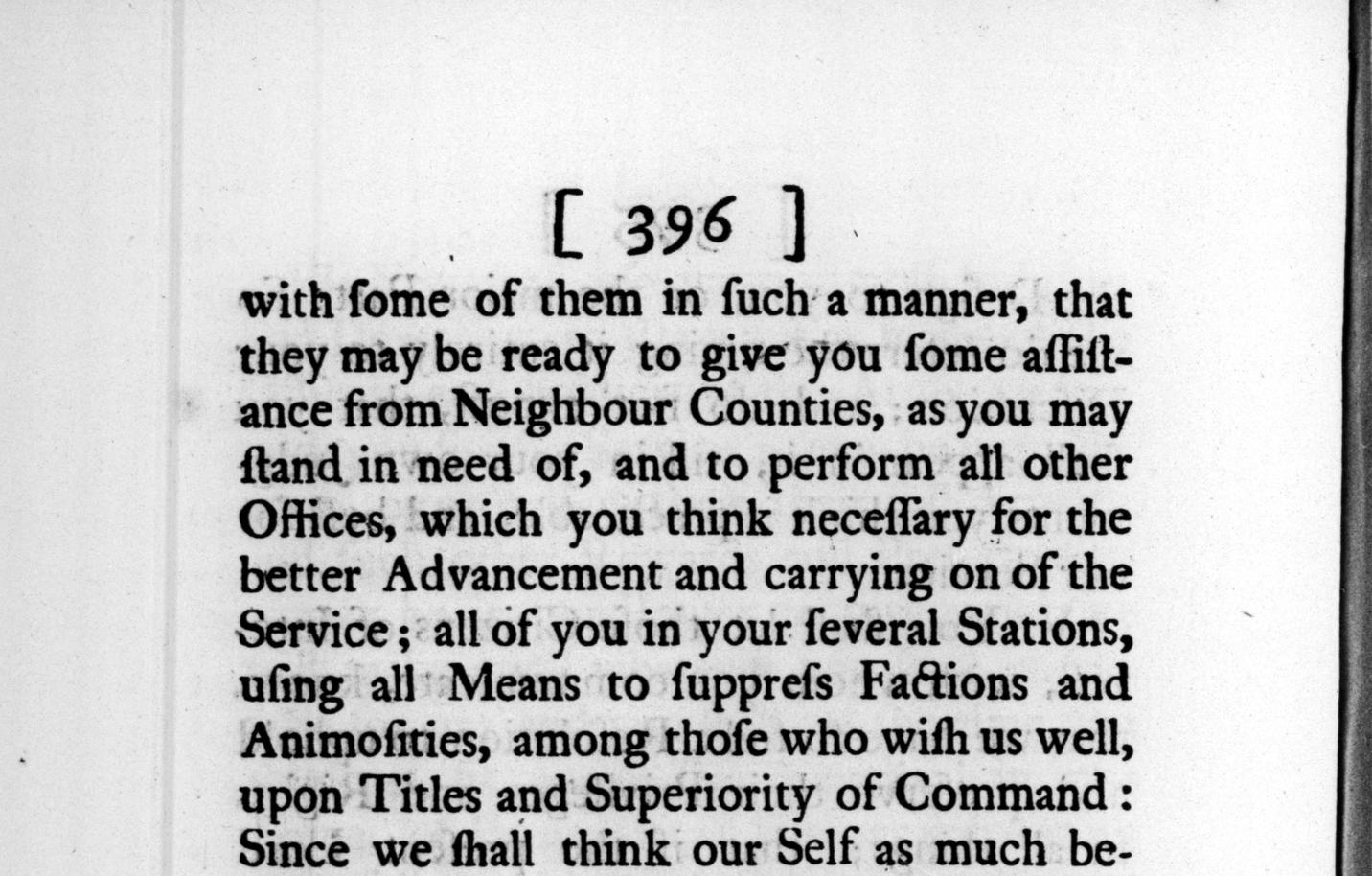
| 16 January 1660 | No. XXVI, p. 396 | No. XXIII, p. 486 | 729. 549. 856. 8. 245. 831. |
Clear superscriptions in the same series are cover names for Barwick: "For Mr. Burden", "For Mr. Brookes", "For Mr. B.", "For Mr. Burges, these"; the editor notes that "B. or any Name beginning with B. seems to have signified Barwick".
02 The Hyde–Barwick key
The 1721 plate gives the complete cipher: numbers 1–692 in eleven columns. Column 1 is the alphabet, three figures per letter (two for k, w, y; none for x, z); 64–69 are skipped; columns 2–11 (70–131, 132–193, 194–254, 255–317, 318–379, 380–440, 441–503, 504–566, 567–628, 629–692) each run A to Y down the rows, three rows per letter, so syllables and words are grouped by initial letter across the columns rather than in one alphabetical list. Several slots are deliberately empty. Entries relevant here: the = 370, for = 210, from = 211, Mr. = 536, Master = 475, Barwick = 572, Hyde, Lord Chancellor = 589; there is no entry for these, Sir or London.
03 The test
| Superscription | Under the Hyde–Barwick key |
|---|---|
| 212 23 12 7 461 36 108 49 498 14 21 410 | gh · h · d · c · gentle · n · ob · r · ven · e · g · little — every group is in the key; the result is nonsense. |
| 729 549 705 99 856 250 245 831 100 859 609 858 101 24 | 729 ✗ · 549 (empty slot) · 705 ✗ · la · 856 ✗ · us · sen · 831 ✗ · le · 859 ✗ · Presbyter · 858 ✗ · li · h — six groups lie above the key's maximum of 692. |
| 729 549 856 21 245 831 99 | 729 ✗ · ∅ · 856 ✗ · g · sen · 831 ✗ · la |
| 729 549 856 8 245 831 | 729 ✗ · ∅ · 856 ✗ · c · sen · 831 ✗ |
The template "For / Mr / [name] / these" cannot be rescued by a shift either: for is 210 and Mr. 536, so 729 and 549 would need offsets
of 519 and 13 respectively. The block 729 549 856 … 245 831 recurring across three letters is a stock dummy line Hyde's clerk copied
out, not an encoded address.
04 The editor's statement
The unabridged English Life of Dr. John Barwick (1724, tr. Hilkiah Bedford), working from the Barwick family papers, appends this note to the letter of 12 June 1659 that enclosed the cipher (pp. 408–409):
But to render the Cypher more difficult to be found out, as each Letter in the Alphabet is represented by three several Numbers, except K, W, and Y only by two, and X and Z by none: So several of the Numbers have no Letter, Syllable, or Word over against them, because they stand for nothing, and were only us'd to perplex such as should attempt to read what was written hereby, without the Help of the Cypher. So several of the Letters were superscribed with Numbers signifying nothing, some with two or three Lines of them, only to puzzle the Enemy, if they should fall into their Hands, which I the rather mention here, because some Persons, for want of examining those Superscriptions, as printed in the Appendix to the Latin Life (p. 358, 360, 389, 396, and 417.) with the Cypher also published there, have wondered what was the meaning of them: and it was for the same Reason, that several of the Chancellor's Letters, besides the Number denoting his Name, were subscribed with other Numbers, that either had nothing in the Cypher to answer them, or nothing to the Purpose. As to the Superscriptions, B. or any Name beginning with B. seems to have signified Barwick.
The pages he names are the four in question. The same puzzle, it turns out, had already been raised and answered in 1724.
05 Method
- Identified the printed source: not the Clarendon State Papers but the Latin Vita Barwick (Internet Archive
bim_eighteenth-century_vita-johannis-barwick-s_barwick-peter_1721); located the four superscription pages and the key plate; verified every figure on the scans. - Transcribed the 643 entries of the plate into a table (
hyde/barwick_key.py) and decoded all four superscriptions. - Checked the shift hypothesis for the "For Mr … these" template; rejected.
- Read the 1724 English edition (
lifeofjohnbarwic00barw) for editorial matter on the cipher; found the note above.
06 Sources
- Peter Barwick, Vita Johannis Barwick (London, 1721), appendix of letters and the "Tabula Cryptographica" facing p. 316 — Internet Archive.
- The Life of Dr. John Barwick, tr. H. Bedford (London, 1724), pp. 408–409 — Internet Archive.
- S. Tomokiyo, "Unsolved Historical Ciphers" and "King Charles II's Ciphers during Exile" (cryptiana).